Birudan washi 1981–
Takakuni Kawahara
川原隆邦
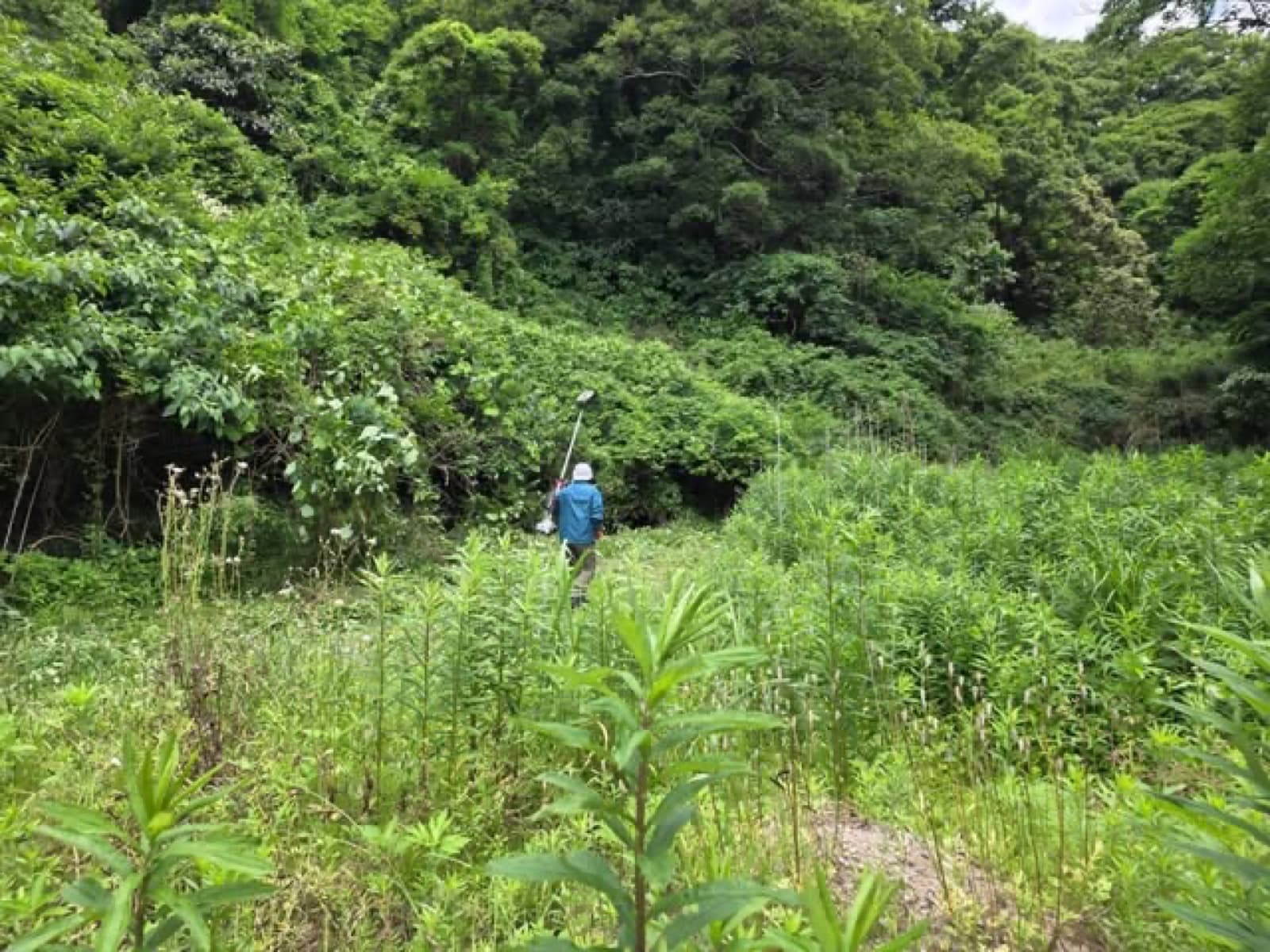
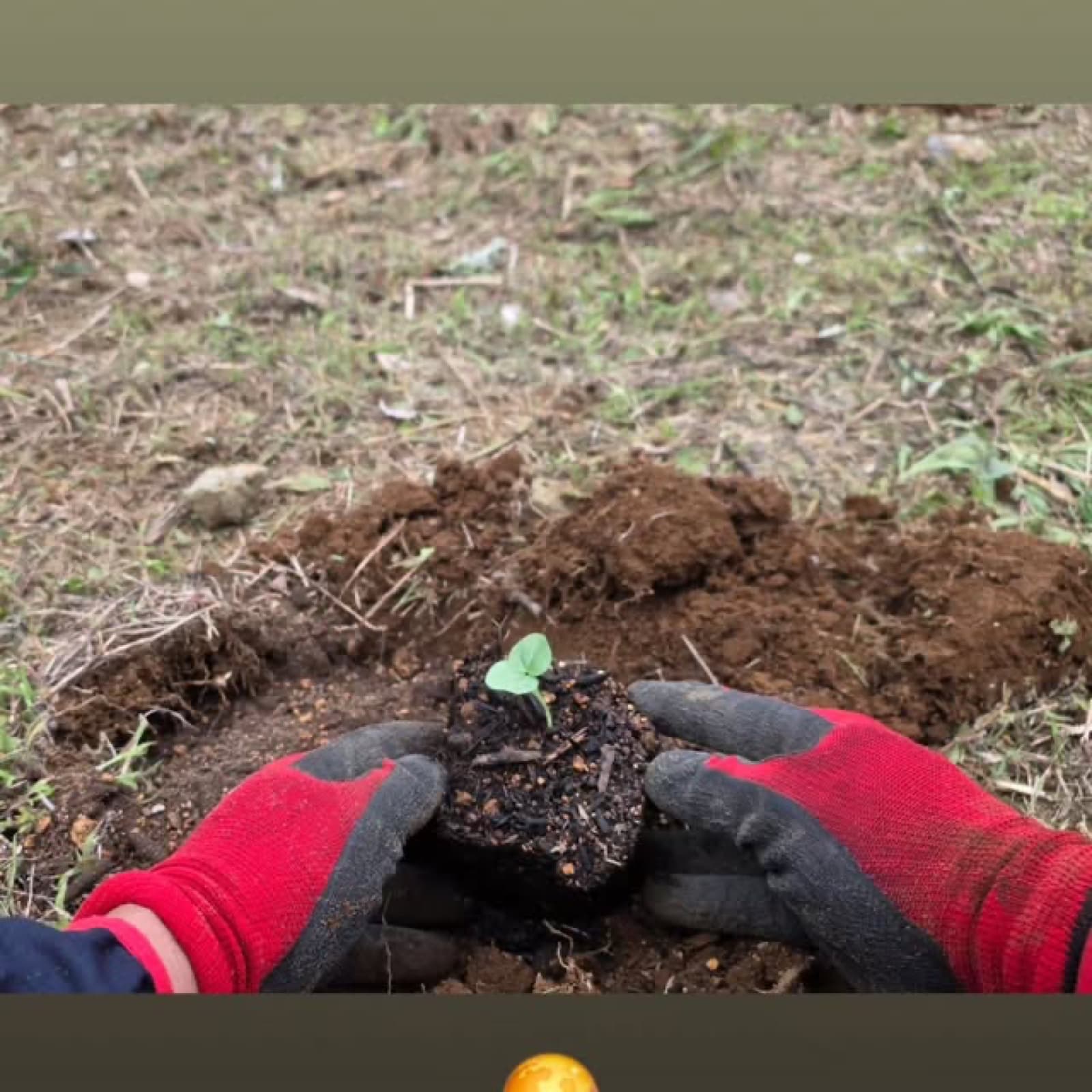
The sole heir to Birudan washi, made for 400 years. He does everything by his own hand, from growing the raw material to forming the sheet.
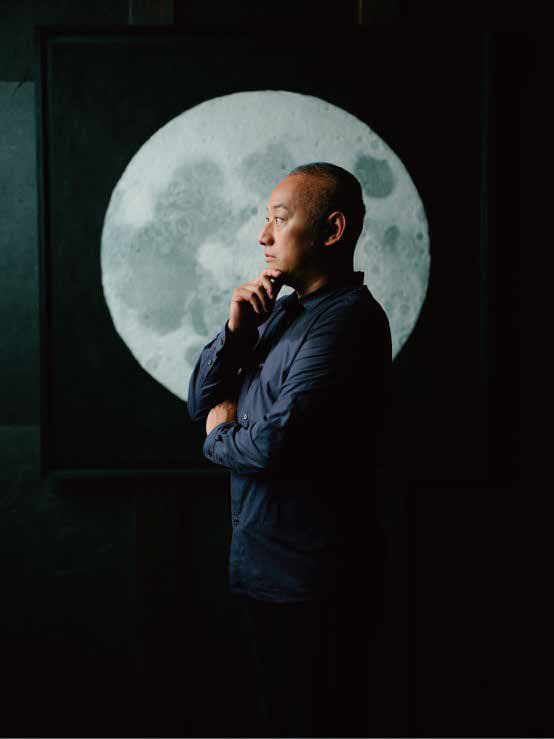
Born on 31 May 1981. His father's postings took the family to Kanagawa, Chiba and Indonesia, where he spent his boyhood, and at eighteen he moved to Toyama Prefecture. He played in the JFL with the aim of turning professional in football; an injury ended his playing career, and he learned that the traditional craft of his home region had no one left to carry it on.
In 2003 he became a pupil of Torakichi Yoneoka, the last papermaker of Birudan washi, handed down in Asahi, Toyama Prefecture. Since his teacher's death in 2009 he has been the only direct heir to Birudan washi. In 2015 he moved his workshop to Mushidani in Tateyama.
Birudan washi is said to have been begun some 400 years ago by people who moved to Asahi from Hirutani in Omi. In the early Showa era nearly 120 households there made paper as winter work, but the craft declined as demand for shoji paper fell away. Together with Gokayama and Yatsuo papers, it is designated a national Traditional Craft under the name Ecchu washi.
He works chiefly to commission, often on large sheets built into architecture. Among his projects are the interior of Kurobe-Unazukionsen Station on the Hokuriku Shinkansen, a wall at TOYAMA Kirari (Kengo Kuma and Associates), the entrance of Toranomon Station on the Tokyo Metro, and BIRUDAN at the entrance to the State Guest House at Expo 2025 Osaka, Kansai. In 2026 he took part in Grand Seiko's The Nature of Time at Milan Design Week, presenting aurora and Utsuroi.
Commissions
- 2026
aurora / Utsuroi — THE NATURE OF TIME
Two works shown in Grand Seiko's exhibition “THE NATURE OF TIME” at Milan Design Week 2026.
- 2025
BIRUDAN — entrance of the Guest House, Expo 2025 Osaka, Kansai
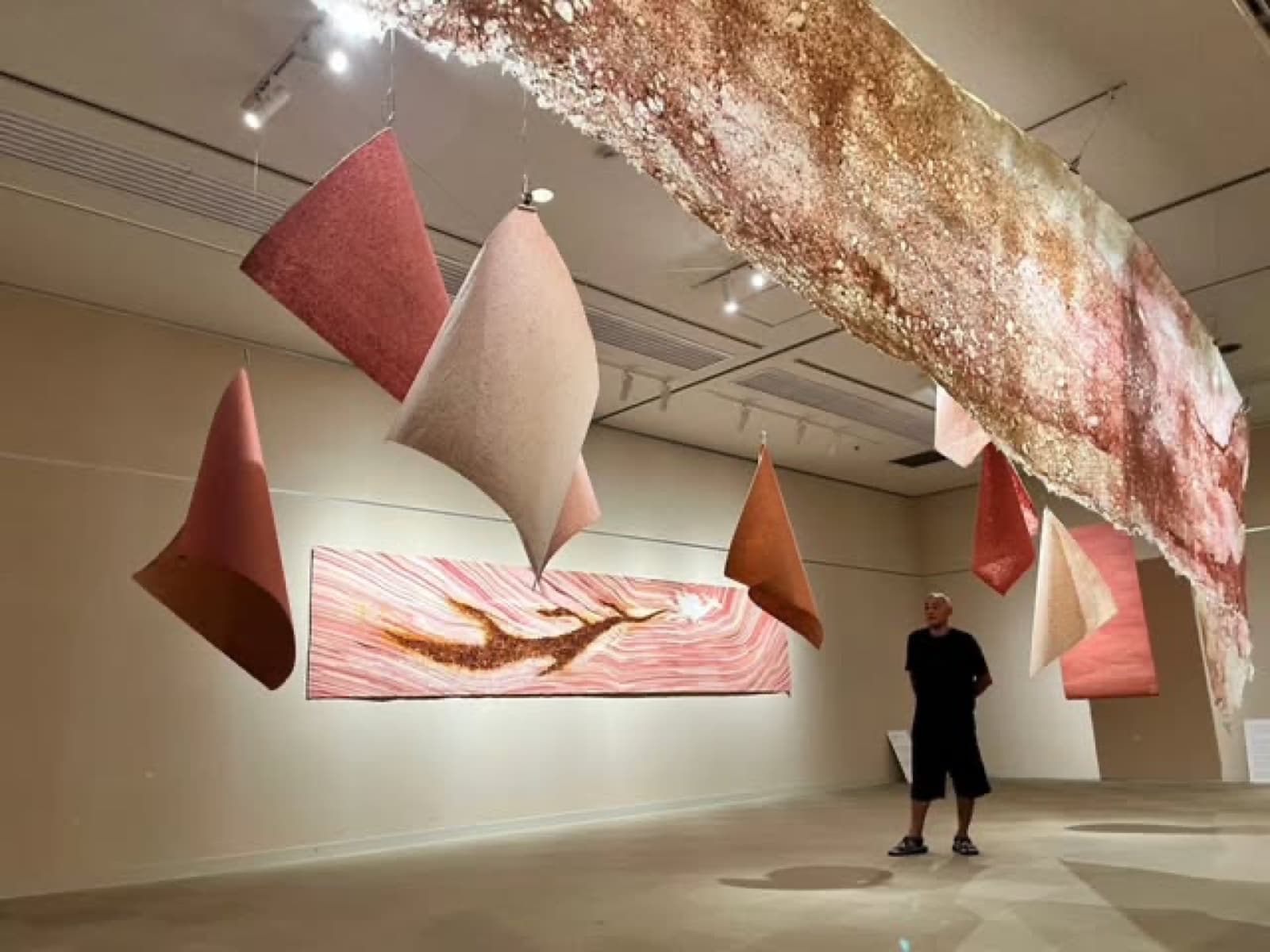
A series of seven sheets, each about 1.5 × 6.5 m, hung in rotation through the Expo. Into each he worked a material chosen on visits to the region: pasture grass and soil from Tokachi, safflower from Yamagata, camellia from Toshima in Tokyo, matcha from Kyoto, sake rice and rice ears from Toyama, denim from Okayama, salt from Ishigaki — Japan's regions as a seven-coloured rainbow.
- 2023
Entrance, Toyama Prefectural Disaster Prevention and Crisis Management Center
Large sheets of Birudan washi for the entrance of the prefecture's new disaster-response centre in Toyama City.
- 2020
Entrance, Toranomon Global Square, Tokyo
A single sheet 3.5 × 10 m, formed in a purpose-built mould, with contour lines of the Toranomon district drawn in twelve colours of thread. Together with the entrance connected to Toranomon Station, more than 200 m² of washi — the first use of the paper as a building material at this scale — glowing like a lantern. Supervised by Eriko Horiki; architecture by Nihon Sekkei.
- 2020
Ariso-gami
Awarded at the International Craft Award Toyama 2020.
- 2018
Musée des Arts Décoratifs, Paris
Washi on the theme of the phases of the moon, shown at an official event of Japonismes 2018 in the Louvre's Palais.
- 2017
Four-Dimensional Net
Layers of ultra-thin washi through which the four guardian beasts — Black Tortoise, Azure Dragon, Vermilion Bird, White Tiger — appear as light passes. Grand Prize, U-50 International Hokuriku Craft Award.
- 2015
Interior, Kurobe-Unazukionsen Station, Hokuriku Shinkansen
Washi for the interior of the new station, completed for its opening.
Lobby columns, Toyama Prefectural Civic Hall
Washi with the bark of Tateyama cedar worked into the sheet, sealed in laminated glass around the lobby columns.
Wall, TOYAMA Kirari
Washi for a wall of the glass museum and library complex designed by Kengo Kuma and Associates in Toyama City.
Paper Dwelling — River Retreat Garaku
For the guest rooms “Suimon” and “Kansui” of the Toyama hotel: rammed-earth walls of local soil and washi made from kozo and tororo-aoi he grows himself.
Tateyama amulets
He continues to make the paper for the amulets printed from Edo-period woodblocks at Oyama Shrine, Ashikuraji.
Chronology
- 1981Born on 31 May. Grows up in Kanagawa, Chiba and Indonesia as his father's work moves the family
- 2003Becomes a pupil of Torakichi Yoneoka, the only remaining maker of Birudan washi (Kawahara Seisakusho, Asahi, Toyama Prefecture)
- 2009His teacher Torakichi Yoneoka dies; he becomes the only direct heir to Birudan washi
- 2015Makes the interior of Kurobe-Unazukionsen Station on the Hokuriku Shinkansen, among other commissions. Moves his workshop to Mushidani in Tateyama
- 2018Takes part in an official event of Japonismes 2018 at the Musée des Arts Décoratifs, Paris
- 2020Makes the entrance at Toranomon Station on the Tokyo Metro and the reception wall at Toranomon Global Square
- 2025Makes BIRUDAN for the entrance to the State Guest House at Expo 2025 Osaka, Kansai
- 2026Takes part in Grand Seiko's The Nature of Time at Milan Design Week 2026, showing aurora and Utsuroi
Inquiries about the works
We welcome inquiries about exhibiting, acquiring or purchasing. For a particular piece, please write to us from that work's page.