On view
Savoring Art with the Five Senses
IWA 5 and Five Artists from Toyama
五感で味わう芸術―IWA 5と富山の5人の作家―
Details
- Dates
- Venue
- Arts and Culture, Wako Main Store B1FGinza, Tokyo
- Exhibiting Artists
- Takakuni KawaharaGaku ShakunagaYukio ShakunagaYo Shakunaga
About the Exhibition
IWA is a sake made in Toyama by Richard Geoffroy, the legendary Champagne winemaker, using assemblage, the art of blending.
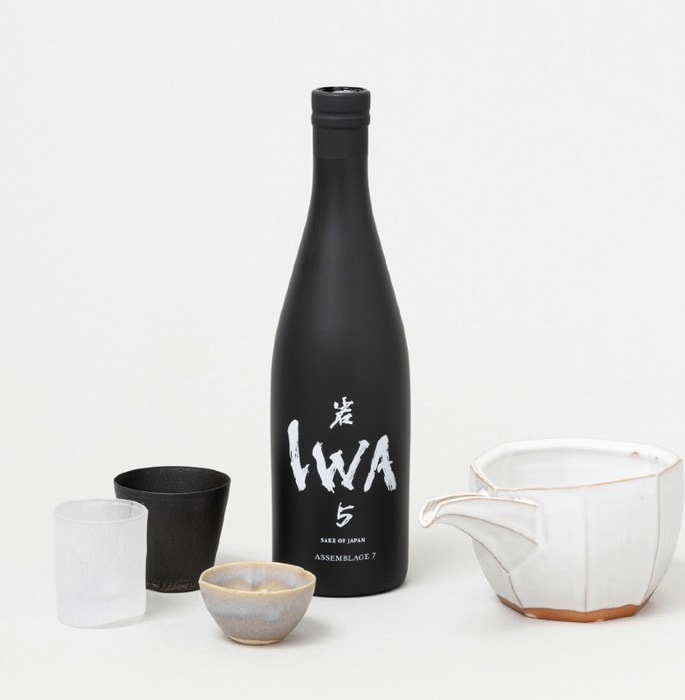
The exhibition offers a chance to experience what IWA means by an art that is tasted. It centres on the new IWA 5 Assemblage 7, released on the opening day, alongside other IWA 5 bottlings.
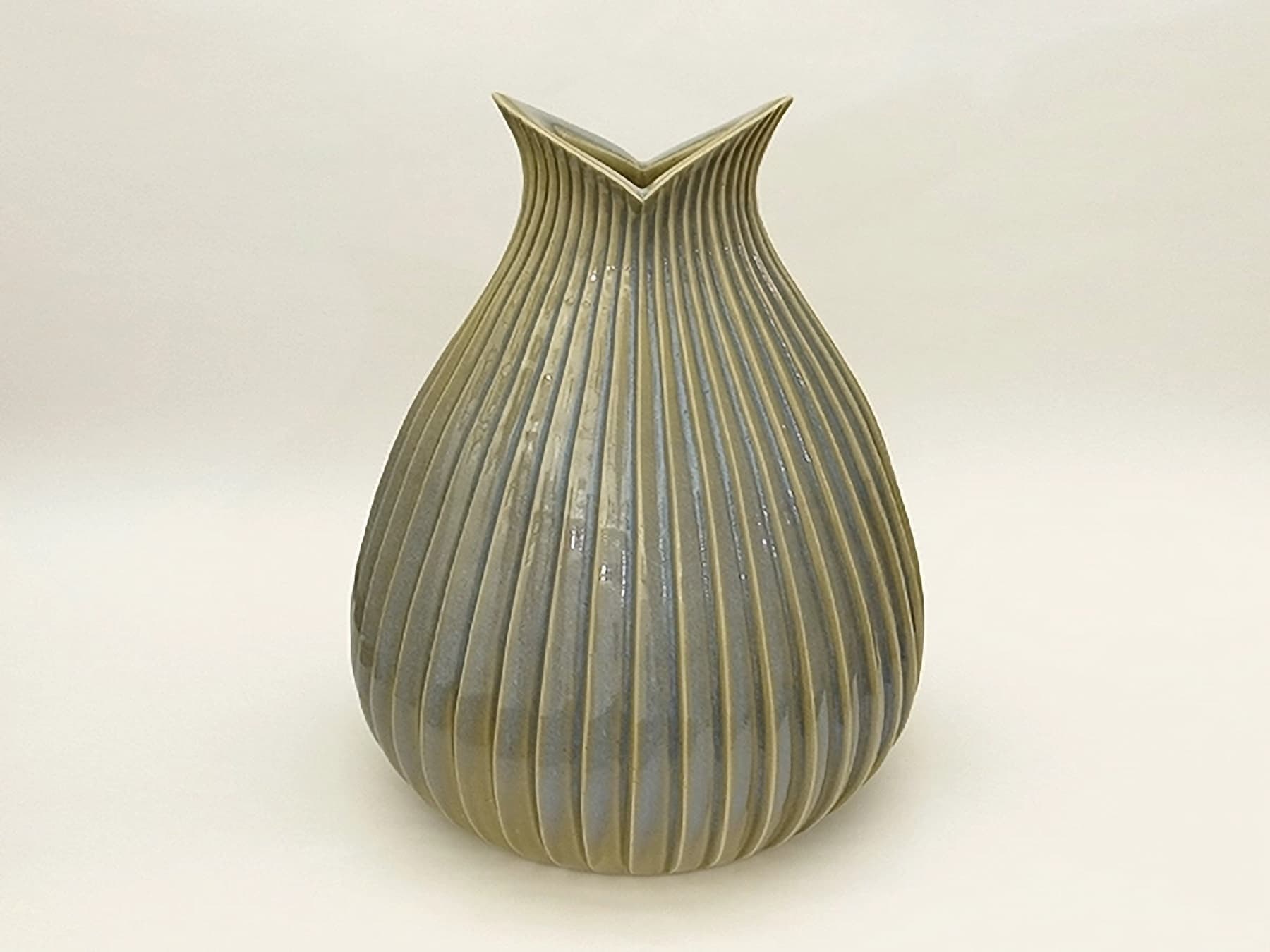
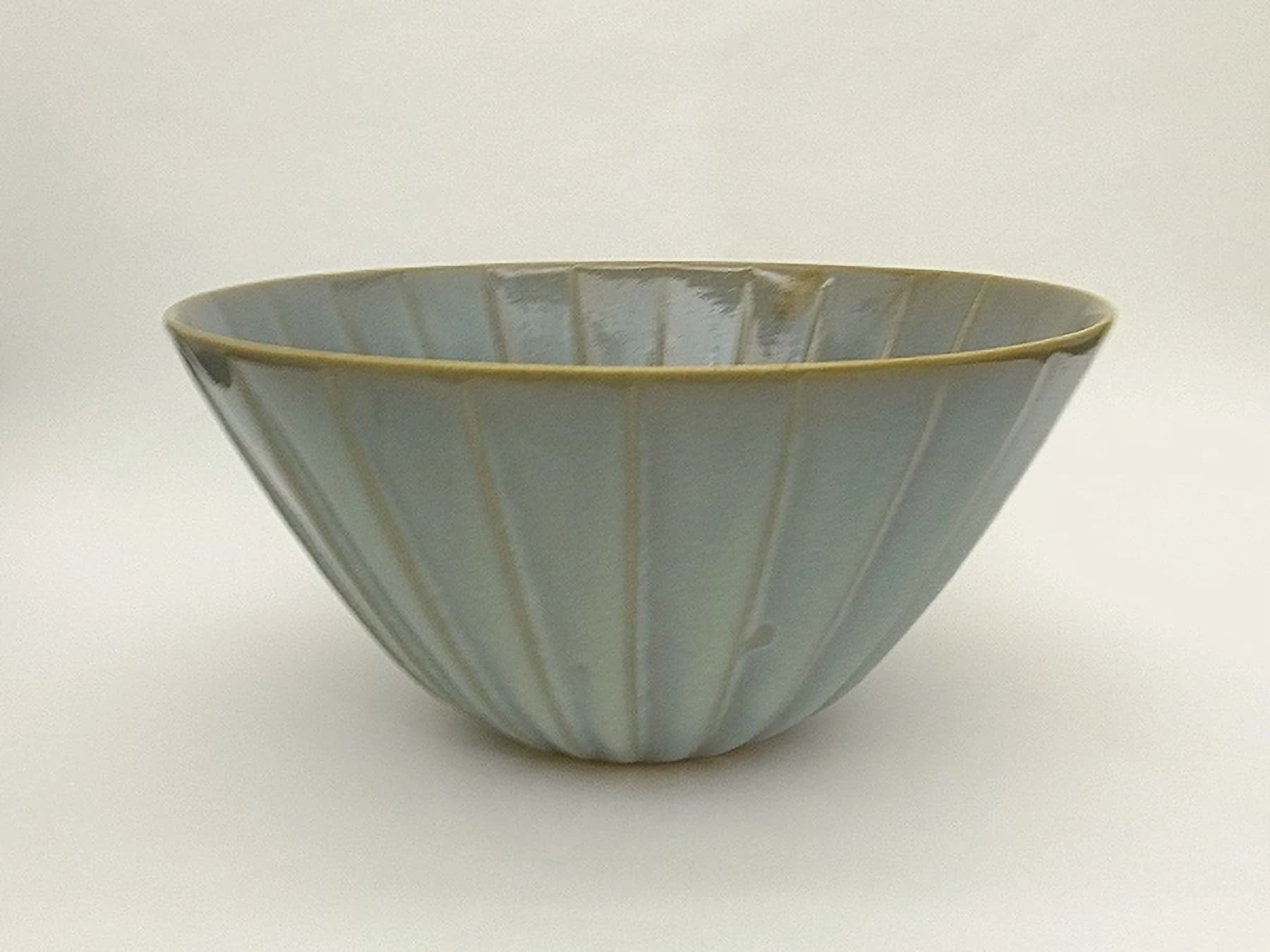
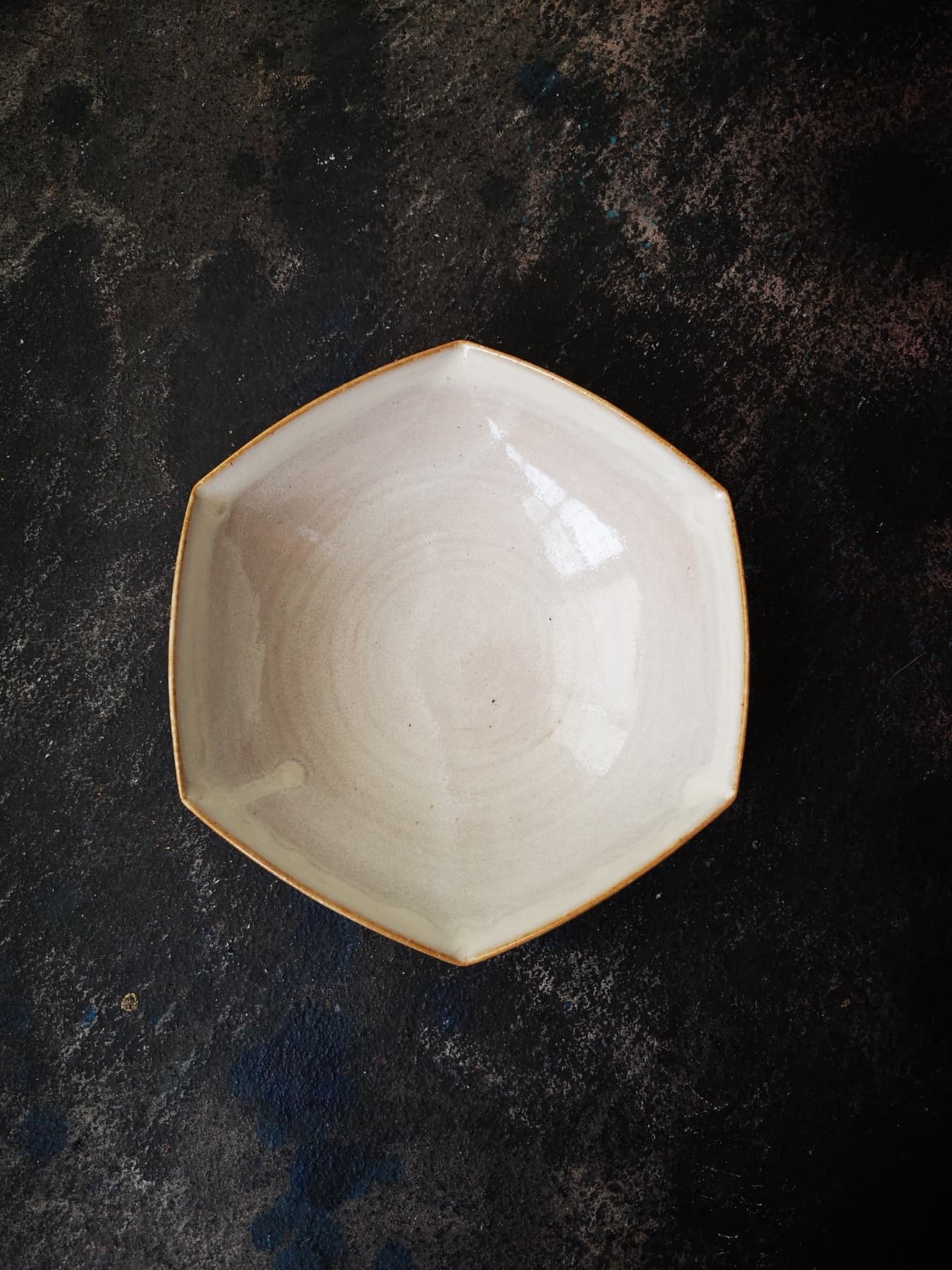
Alongside it, work by five artists based in Toyama, the same region as IWA. Four of them show and sell their work, and washi artist Takakuni Kawahara presents an installation.
A chance to see the range of expression born of Toyama’s landscape and its spirit of making.
Exhibiting Artists
Five artists based in Toyama take part; the four represented by the gallery are listed here.
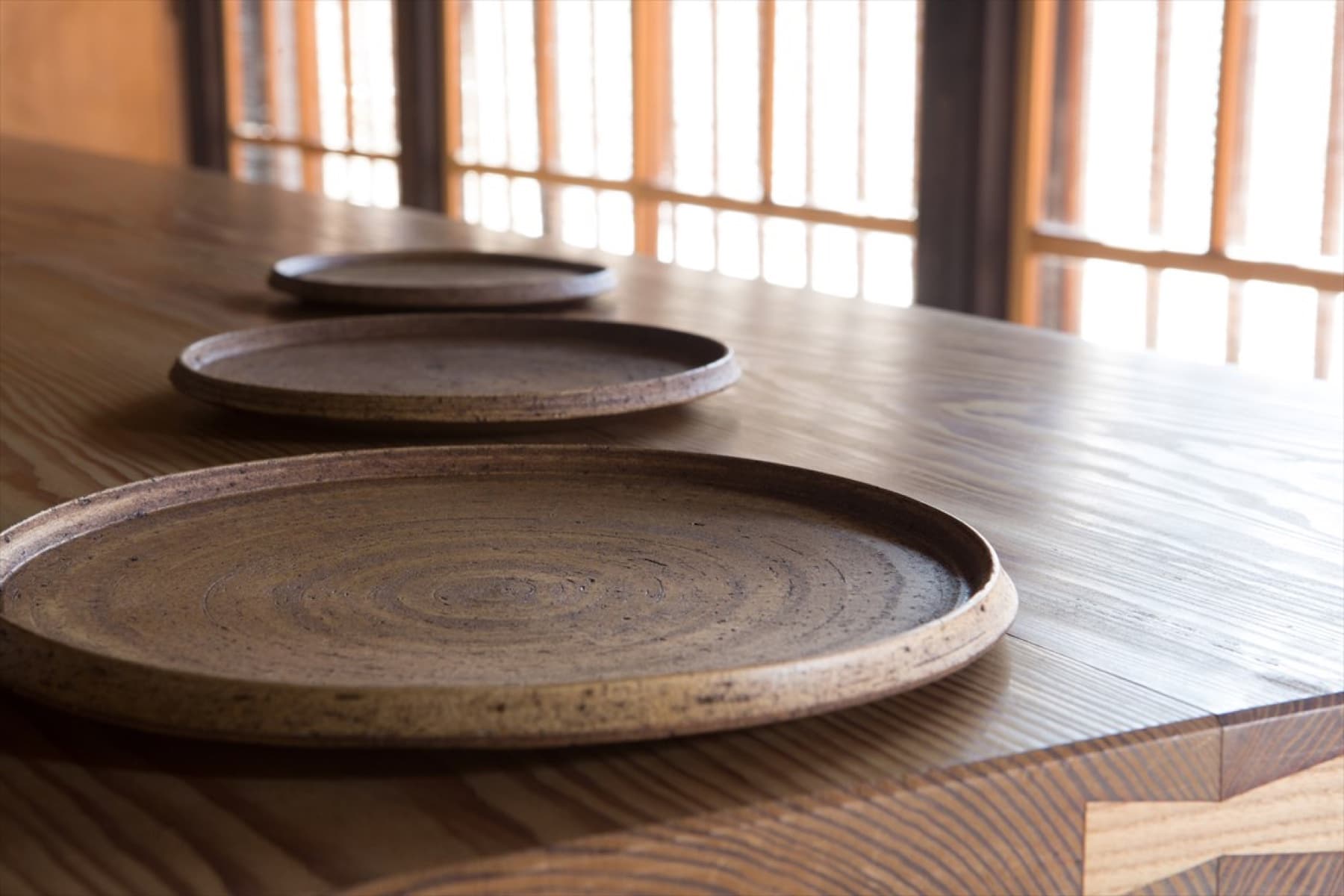
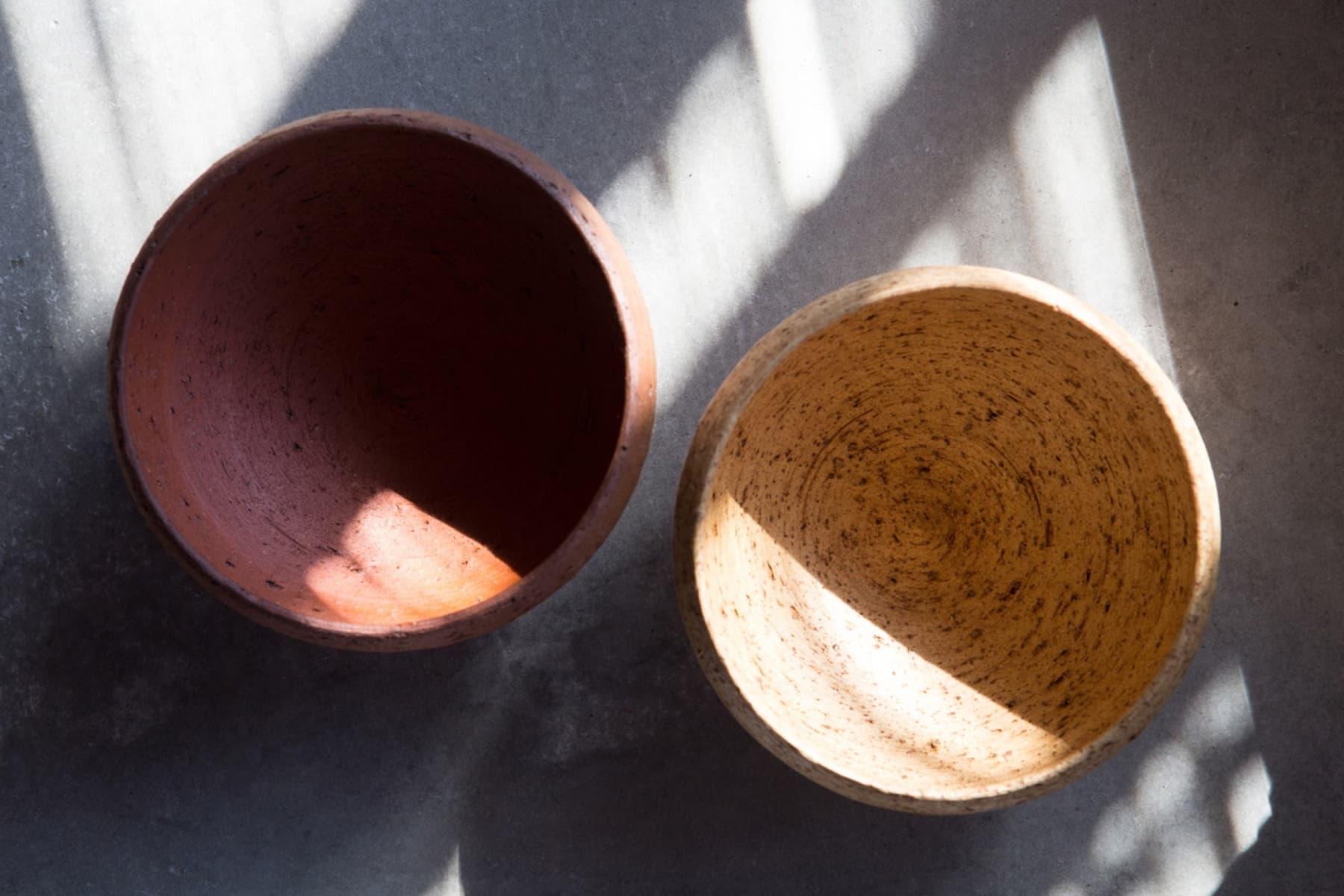
Gaku Shakunaga and Yo Shakunaga both grew up at Shorakugama, the Ecchu-Seto kiln of Yukio Shakunaga, and each now works independently.
Takakuni Kawahara
Installation
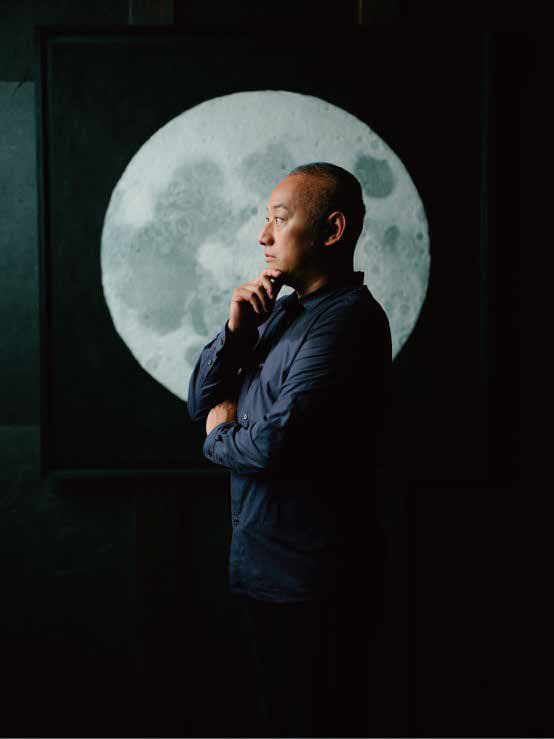
The sole heir to Birudan washi, made for 400 years. He does everything by his own hand, from growing the raw material to forming the sheet.
Gaku Shakunaga
Ceramics
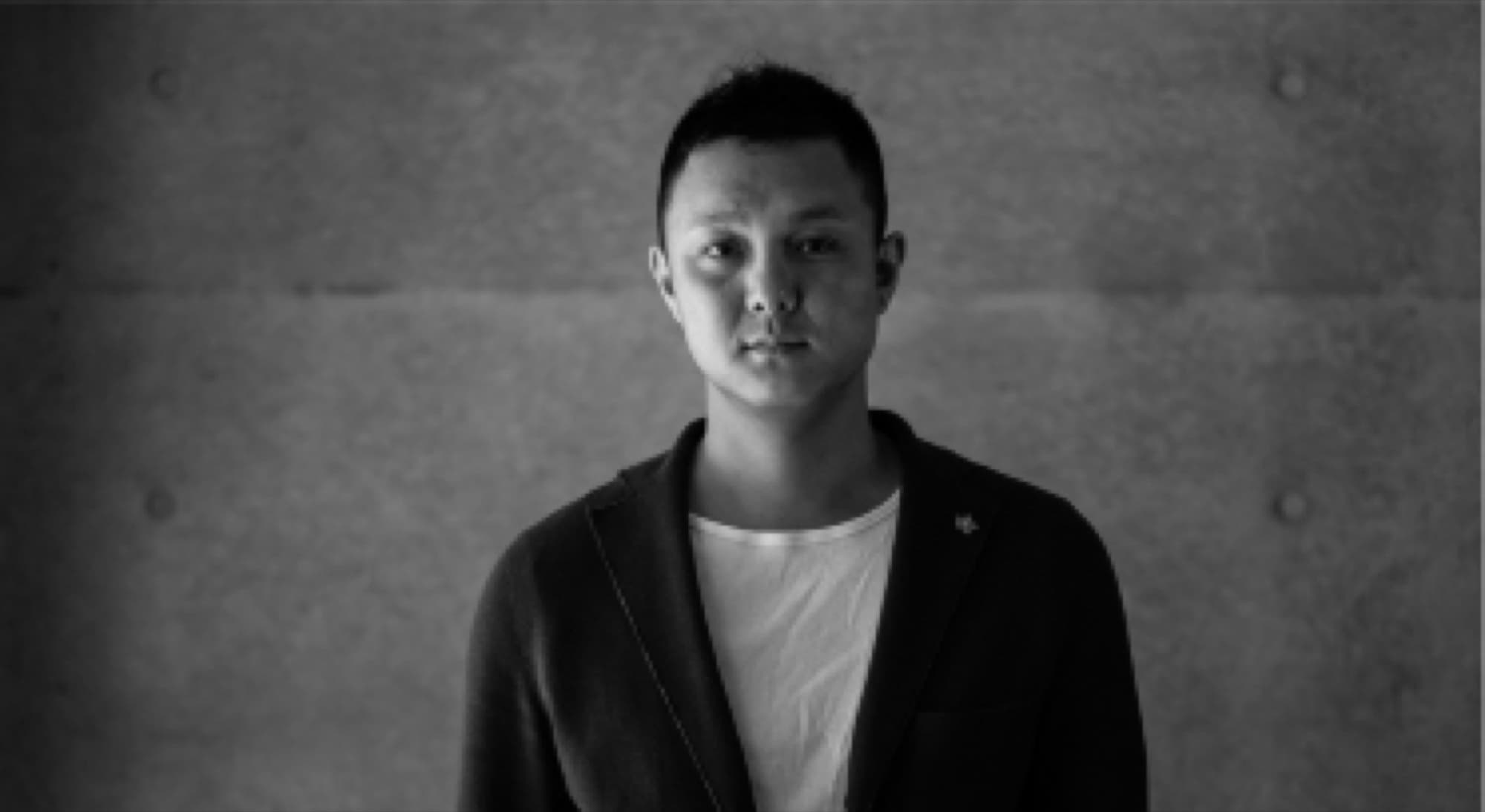
From sculpture to clay. Born into a family of Ecchu-Seto potters, he works among the old storehouses of Iwase in Toyama, in search of a ceramic expression that has not existed before.
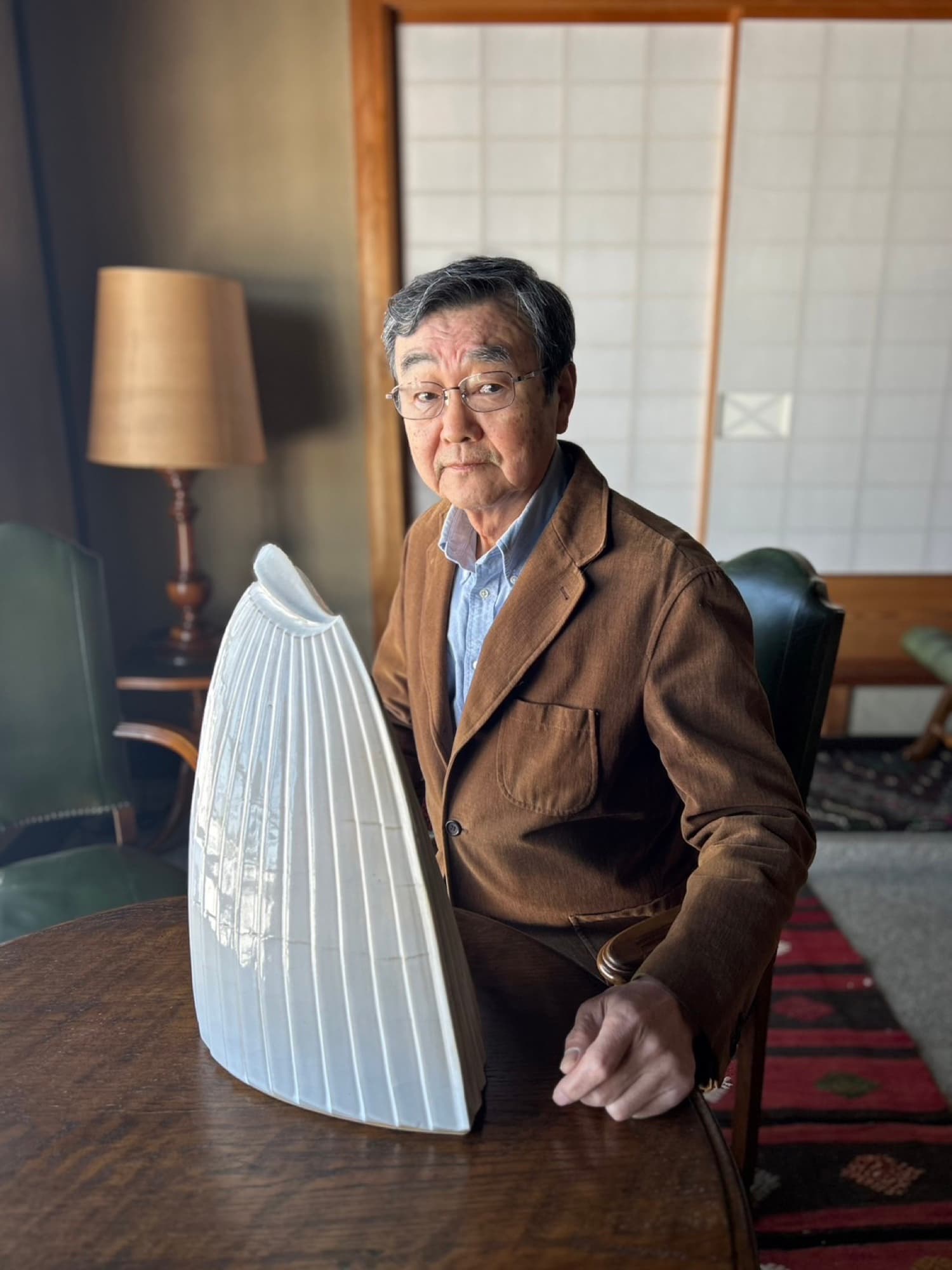
Yukio Shakunaga
Ceramics — Ecchu-Seto
Working the white clay of Tateyama, he carries Ecchu-Seto ware into the present. Steve Jobs came to his solo exhibition in Kyoto, and commissioned work from him for years afterward.
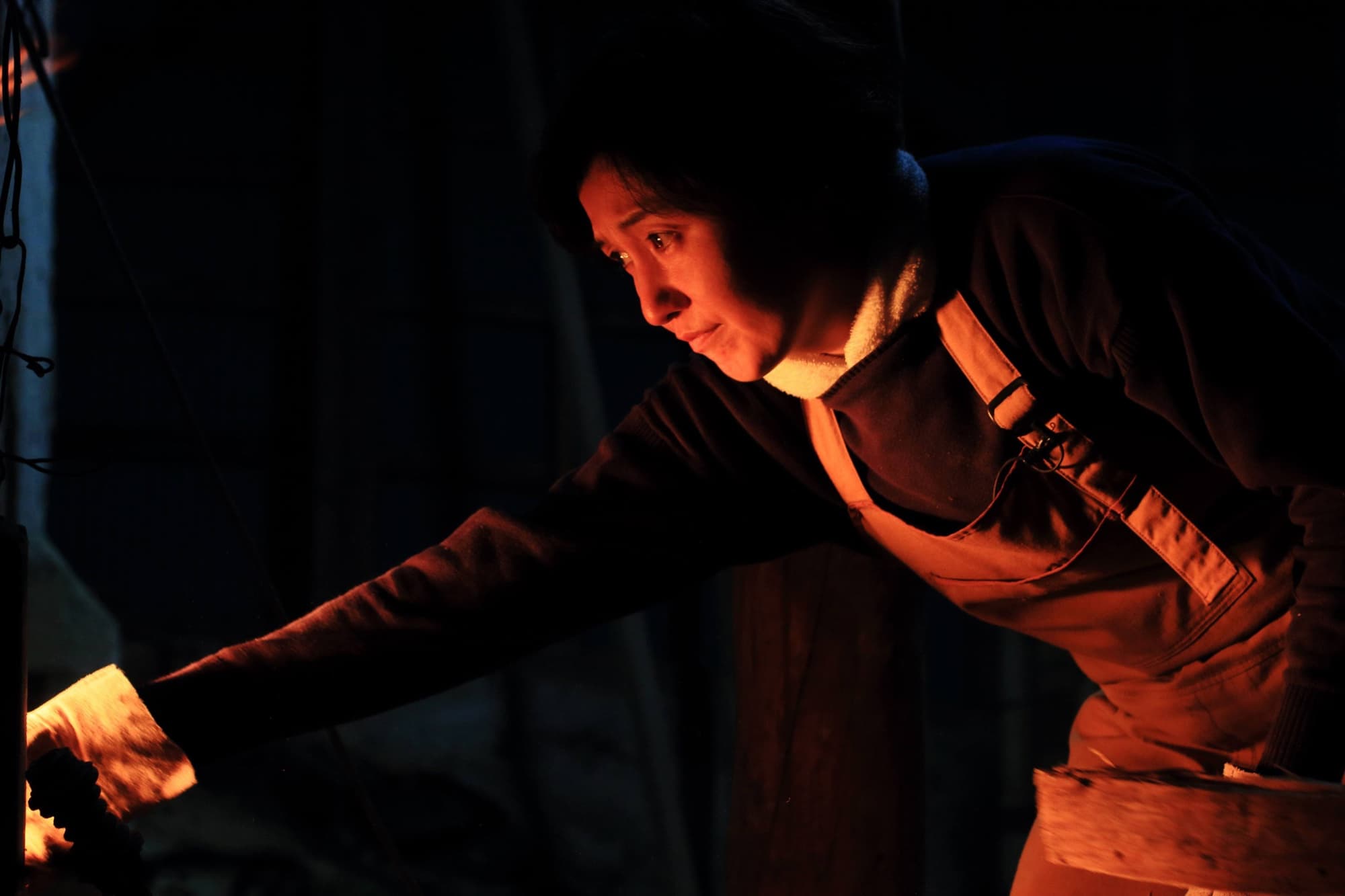
Yo Shakunaga
Ceramics — Ecchu-Seto
Carrying on the 430 years of Ecchu-Seto ware in Tateyama, she makes vessels for daily life that hold the turning of the seasons and the character of the place.
About the artists
Takakuni Kawahara
Born in 1981 in Toyama Prefecture. A papermaker and artist, the sole successor to Birudan washi, one of the papers of Ecchu. In 2003 he became a pupil of Torakichi Yonegaoka, the last craftsman of the tradition. Based in Tateyama, Toyama Prefecture, he carries out every stage alone, from growing the raw material to forming each sheet by hand. His work is marked by an expression unbound by traditional technique; through artwork for large architectural spaces and applications in interiors, he continues to show the world a washi that belongs to the present day.
Gaku Shakunaga
Born in 1978 in Toyama Prefecture (his family home is Shorakugama, the Ecchu-Seto kiln of Yukio Shakunaga). Graduated from the Department of Sculpture, Tokyo University of the Arts, and from the forming course of the Kyoto Prefectural Ceramics Technical Institute. In 2006 he became independent of the family kiln and began working in Higashi-Iwase, Toyama City. His tableware has been adopted by many well-known restaurants in Japan and abroad, and he is drawing attention as a young ceramicist.
Yukio Shakunaga
A ceramicist born in 1954 in Tateyama, Toyama Prefecture. The second generation of Shorakugama, a kiln carrying on the Ecchu-Seto tradition. He studied tea ceramics under Sozan Kaneshige of Bizen ware and established a style of his own while inheriting the tradition, working with particular care over the choice of clay — the fine local white clay and other natural materials — and over glazes of his own formulation. At a solo exhibition in Kyoto he met the late Steve Jobs, founder of Apple in the United States, who praised his work and used it for many years; he is widely known around the world for this as well.
Yo Shakunaga
Born in Tateyama, Toyama Prefecture. After completing the forming course of the Kyoto Prefectural Ceramics Technical Institute, she began making pottery at her family kiln, Shorakugama of Ecchu-Seto ware. She has held solo exhibitions since 2001, and in 2014 moved her studio to an old house in Mushidani, Tateyama. Using the good clay dug nearby, she makes vessels that enrich daily life.
About IWA
IWA is a sake made by Champagne winemaker Richard Geoffroy at the brewery built in Shiraiwa, in Tateyama, Toyama Prefecture. Here we introduce its makers and its brewery, the thinking behind it, and how to enjoy it.
The makers
Richard Geoffroy is a winemaker who also holds a doctorate in medicine. In 1990 he became the fifth Chef de Cave of Dom Pérignon, and for 28 years he led this legendary house. In 2019 he founded the company Shiraiwa, and he makes IWA as its founder and maker.
Shiraiwa was founded together with two co-founders. Ryuichiro Masuda, born in 1966, is president of Masuda Shuzo, founded in 1893, which makes Masuizumi, the most famous sake brand in Toyama Prefecture and an innovative, singular one. In his local community of Iwase he is also a strong supporter of craftspeople. Charles-Antoine Picart, the CEO, is from Paris. He graduated from the Wharton School in the United States in 2000 and spent 18 years at Dom Pérignon and Moët & Chandon, serving as a manager and director.
The making of IWA brings in artists of international standing, among them the architect Kengo Kuma and the designer Marc Newson, as well as a calligrapher, a designer and a photographer. “To be in harmony with the world’s cultures and cuisines, and to create high added value. To pursue the essential, and to remain proud of our Japanese roots.” This is how Geoffroy describes what IWA aims for.
The brewery in Shiraiwa
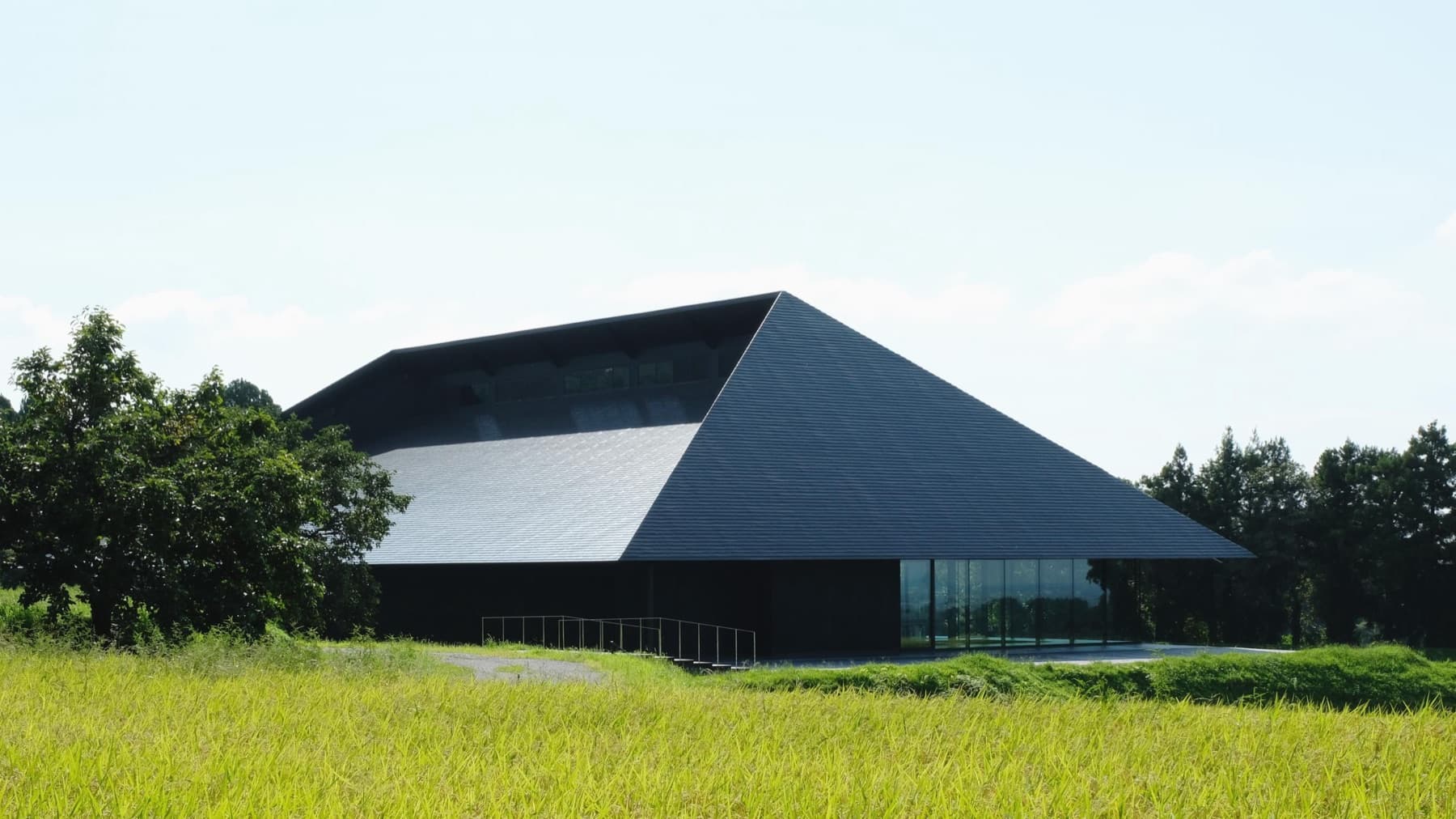
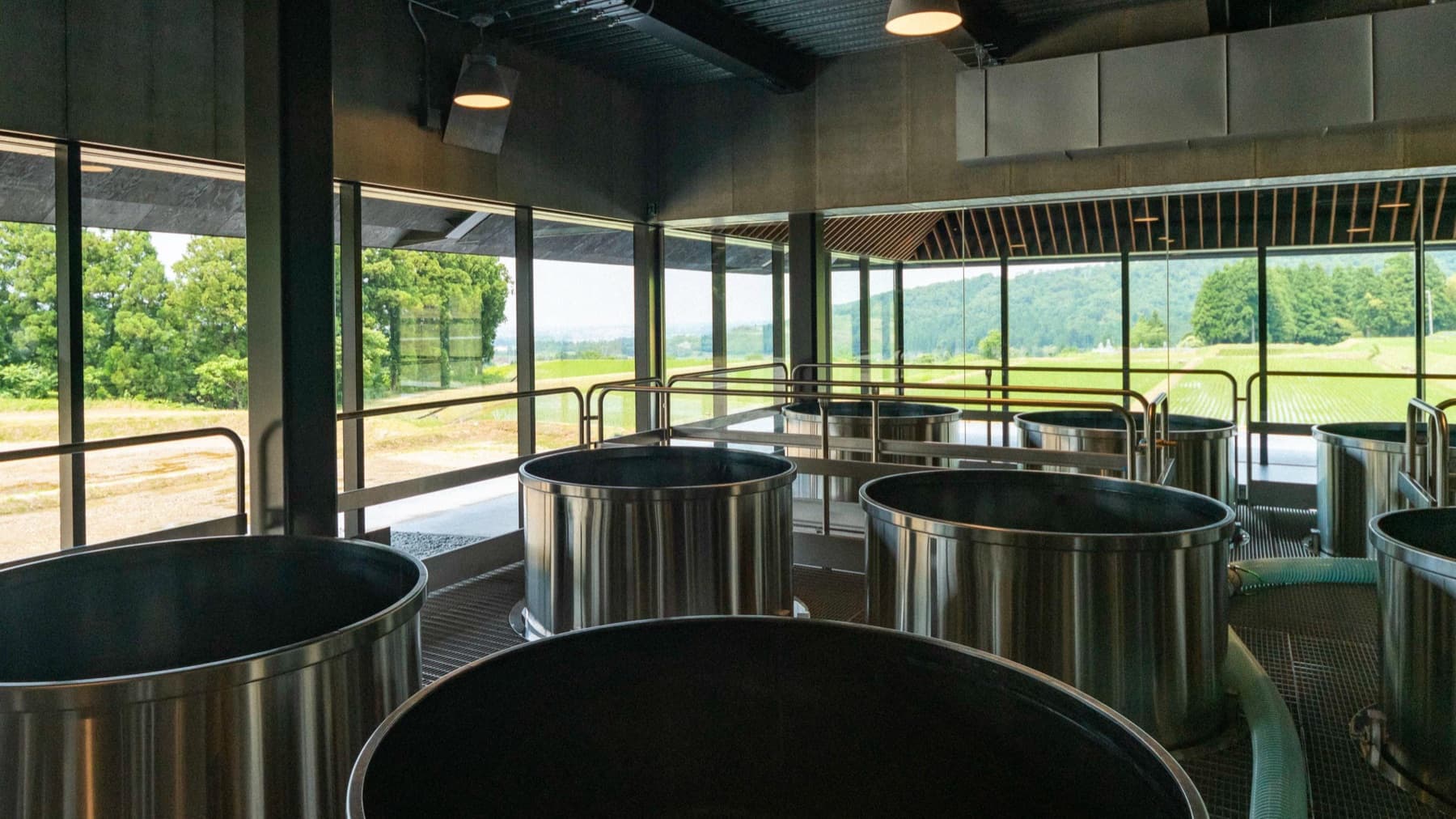
IWA’s brewery is in the Shiraiwa district of Tateyama, Toyama Prefecture, a place surrounded by rich nature and rice fields. “The Origin is the Destination.” IWA’s roots lie in Shiraiwa, and the brewery was built here so that admirers of IWA from all over the world could visit.
Created with the architect Kengo Kuma, the building is a contemporary kura, as sake breweries are called in Japanese. Inspired by the region’s traditional gassho-zukuri farmhouses, it blends into the landscape amid the great outdoors, and everything, from sake-making to reception, sits under a single roof.
IWA 5 and assemblage
To make IWA 5 is to seek out and build a perfect balance. That cannot be achieved with a single base sake alone; it comes from assemblage, the blending of several. The number 5 in its name stands for balance, harmony, fusion and essence, and for IWA it symbolises assemblage.
The defining character of IWA 5 is its complexity and its pleasing balance. Rich in flavour yet light, it gives an unbroken sense of consistency and harmony. It does not only express a fine sense of balance: it continues to evolve over time, promising a new experience free of fixed ideas. IWA keeps exploring every possibility as it takes on new ways of making sake. There are no set rules.
Each assemblage has its own character. Assemblage 2 expresses balance and complexity, a delicacy that puts purity and aromatic intensity first, and lively aromas. Assemblage 3 brings power and a harmony of sensations: dense and deep, with a smooth, pleasing finish. Assemblage 4 has refinement, a firm body with a light, floating quality, and remarkable dynamism. At the heart of this exhibition is the new IWA 5 Assemblage 7, released on the opening day.
The bottle
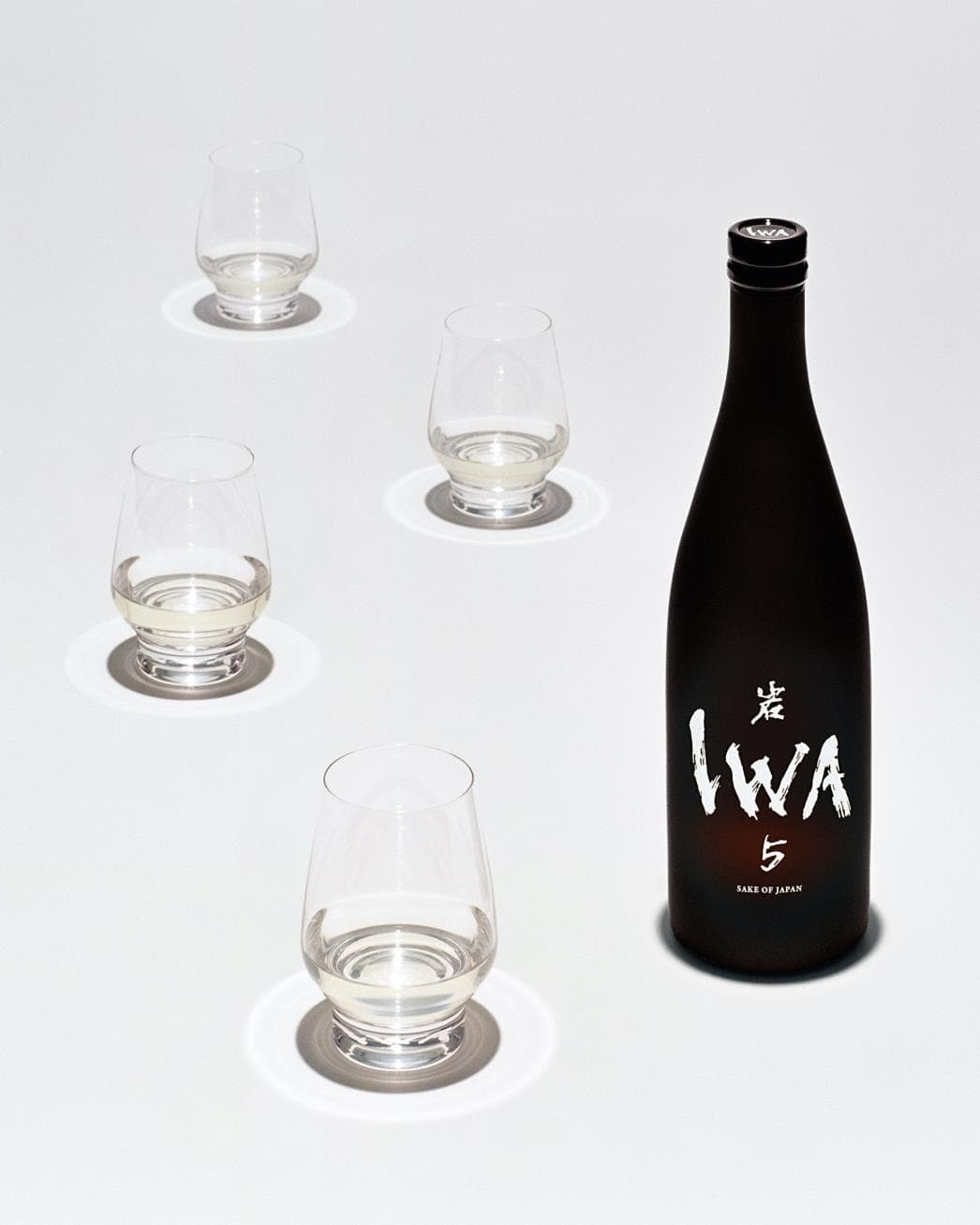
A bottle and logo with a firm visual identity. Clean-cut, minimal and clear, yet alluring. Sensual and sensory, while keeping an element of mystery. The black varnished cap is of noble glass, its solid grace emitting a decidedly satisfying clink when nudged open.
How to enjoy IWA
“The moment you taste IWA 5, I think you will sense the energy we have put into brewing it,” says Geoffroy. Just as IWA has always taken on challenges, he hopes its admirers will try many different ways of drinking it. Temperature and glassware are the keys.
Whether chilled or warmed, IWA 5 shows a different face at each temperature, and the glass changes the taste as well. The glasses IWA recommends are the Lehmann Signature n°4 Arnaud Lallement Ultraleggero, the John Jenkins Starr White Burgundy, the Riedel Sommeliers Burgundy Grand Cru, the Riedel Extreme Junmai and the IWA glass by Marc Newson.
- Chilled (reishu)
- The flavour tightens and turns crisp. As it warms slightly, it takes on a delicate feel on the palate, with gentle, soft fruit such as stone fruit and cherry.
- Hitohada-kan, skin-warm (35–37 °C)
- Seductive. Smoothness and softness merge into one in the finish, recalling candied almonds.
- Jo-kan, warm (45 °C)
- Surprisingly soft on the palate, where viscosity and a silky texture come together. It recalls mint, aniseed and camphor.
- Tobikiri-kan, piping hot (55 °C)
- It brings out the character of the rice: round, rich and textured, recalling white pepper.