Nihonga (Japanese-style painting) 1957–2019
Hiromitsu Kato
加藤弘光
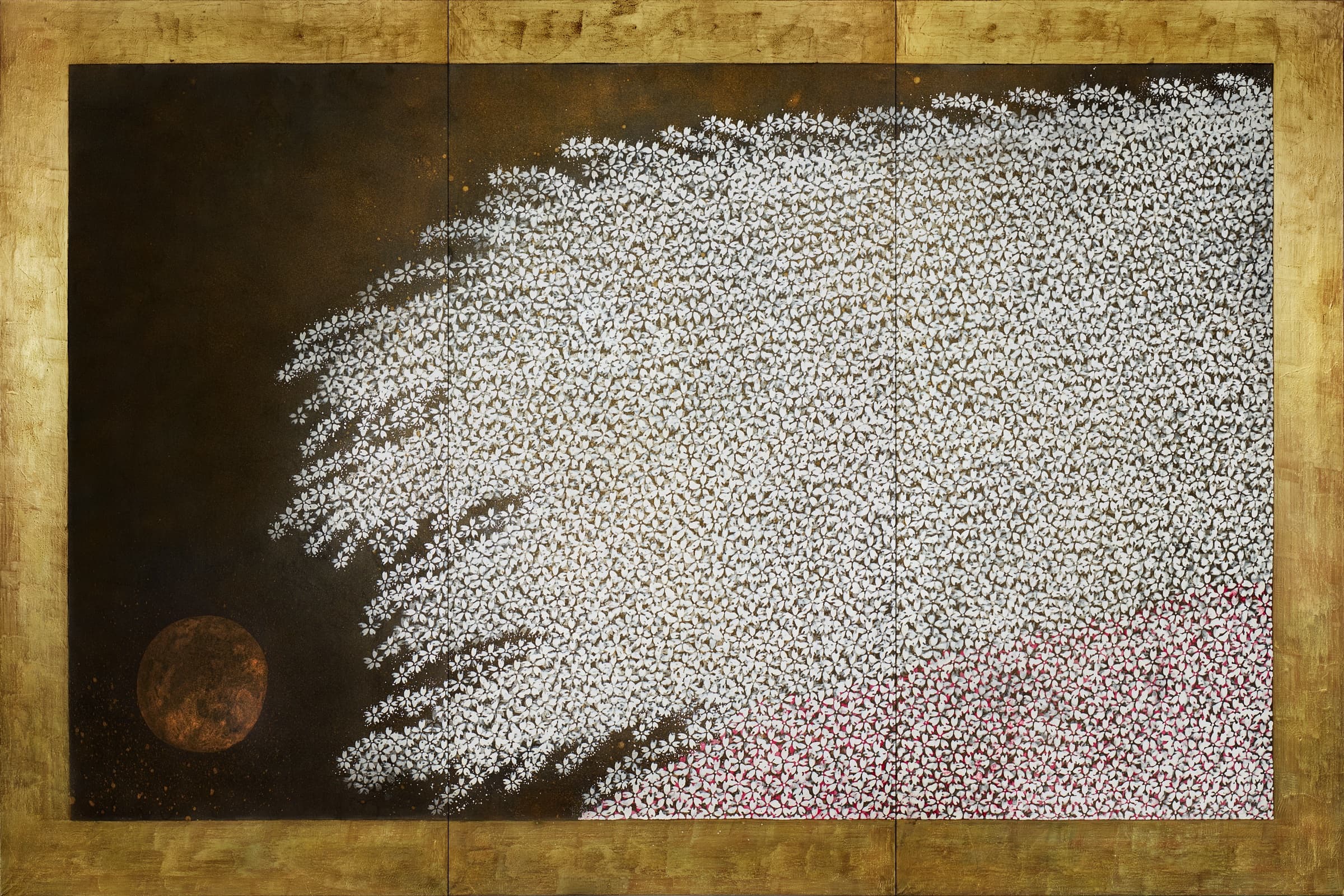
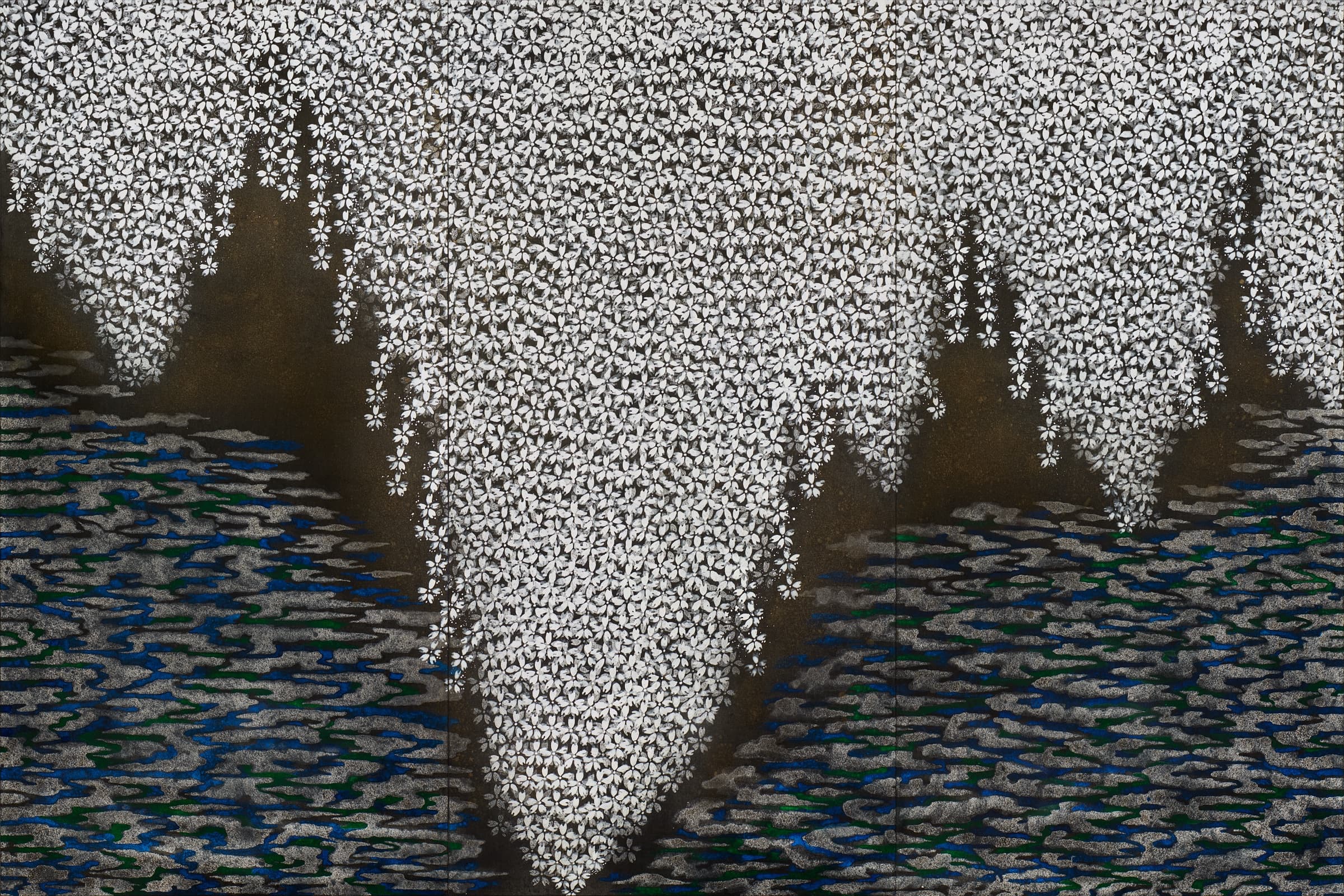
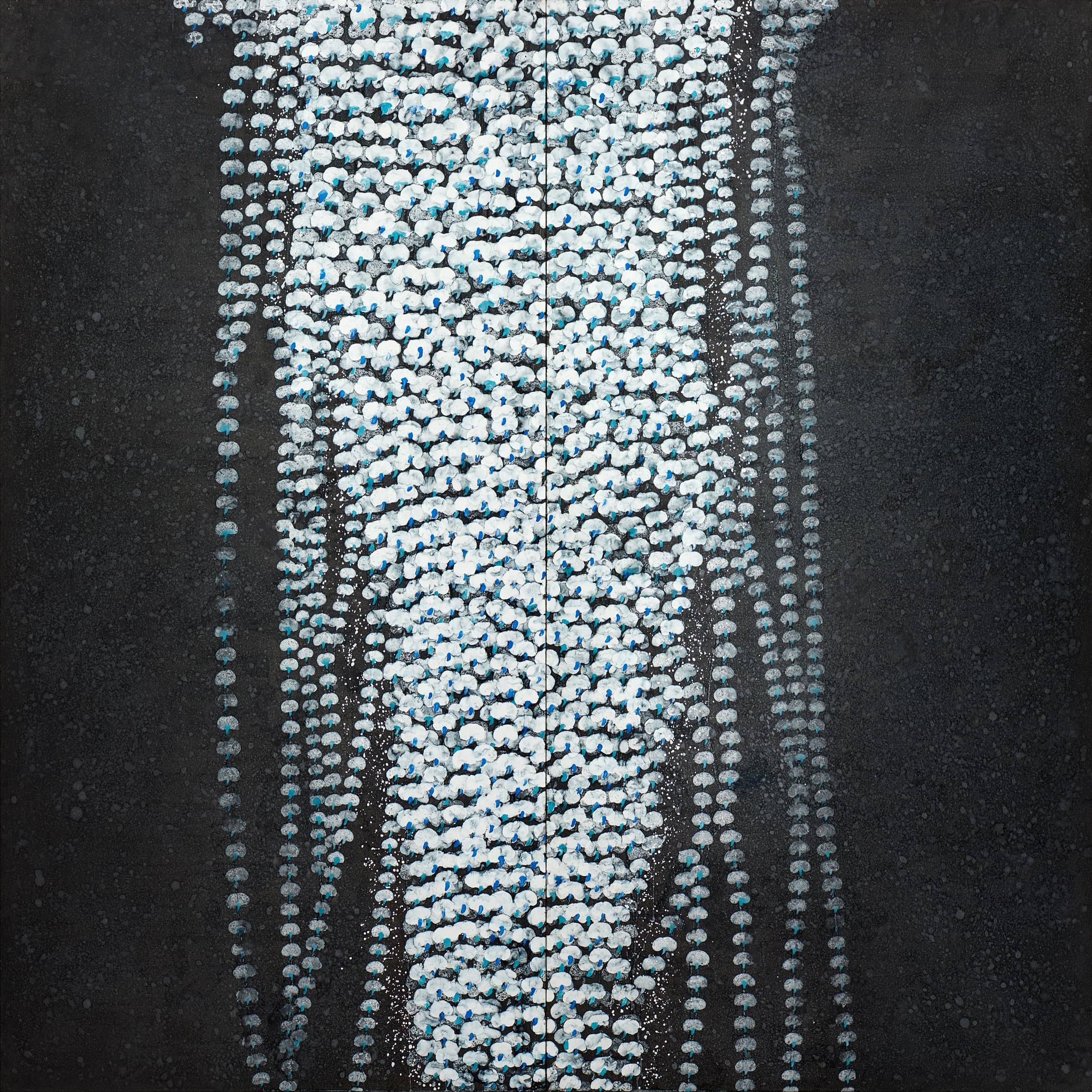
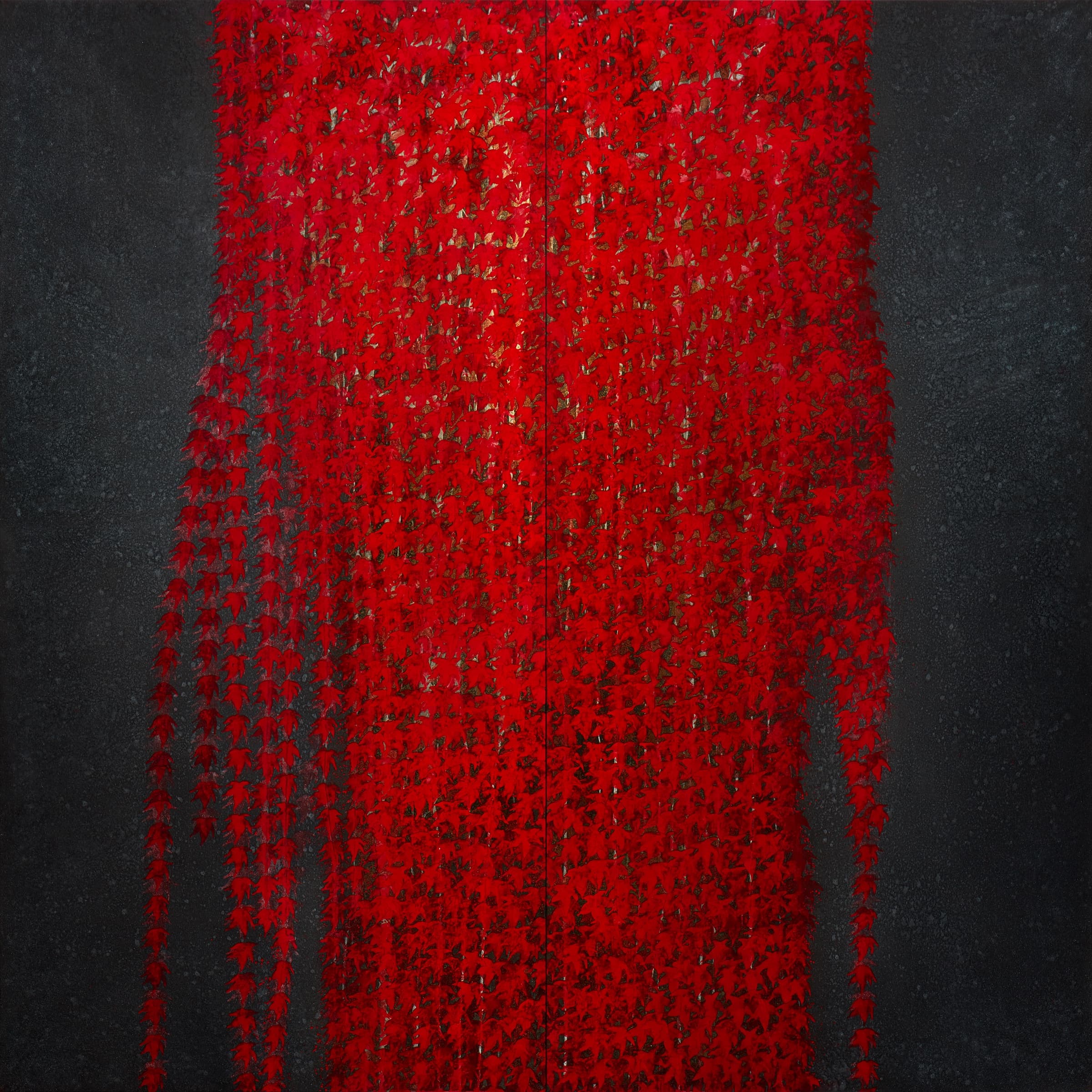
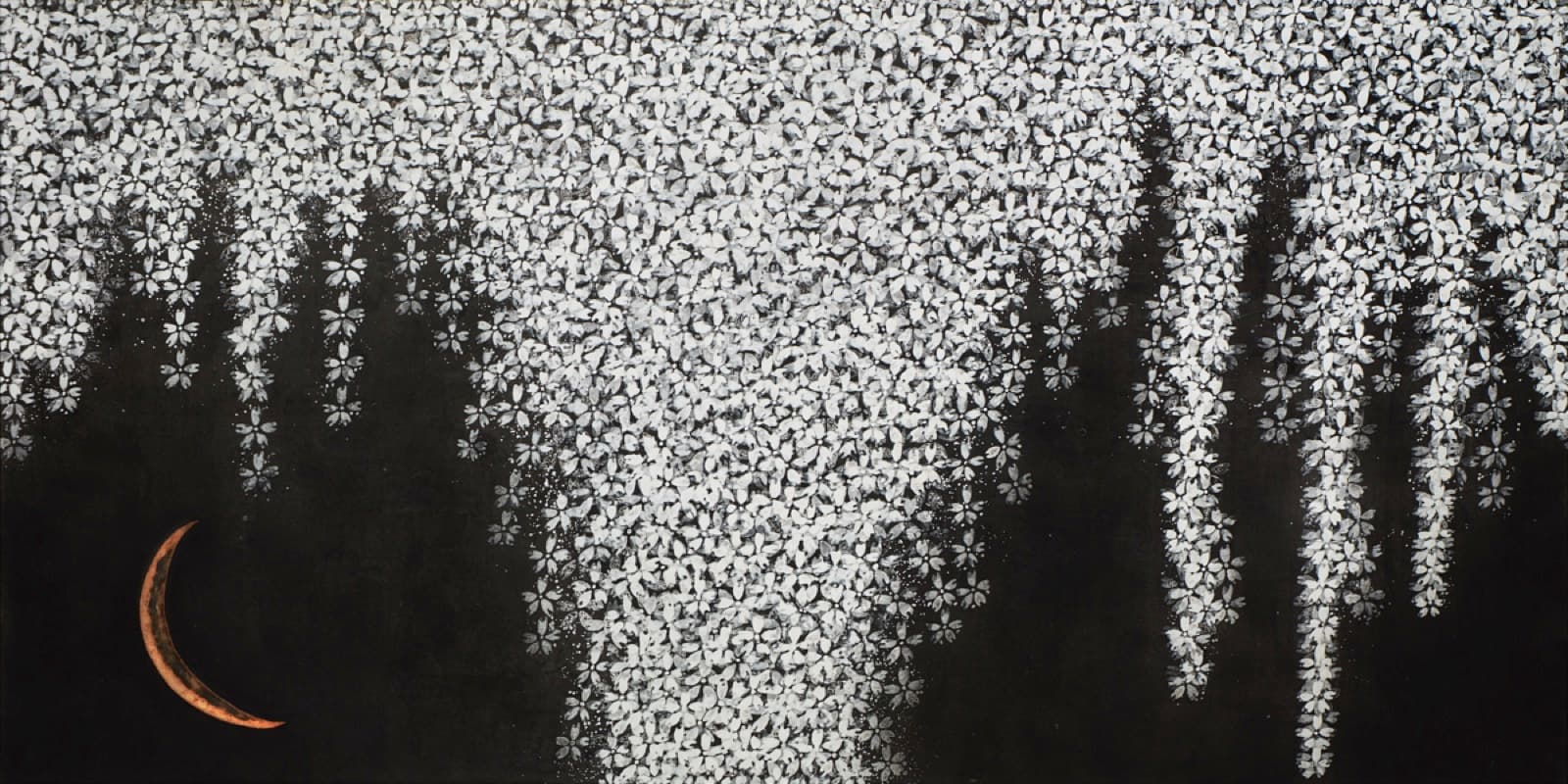
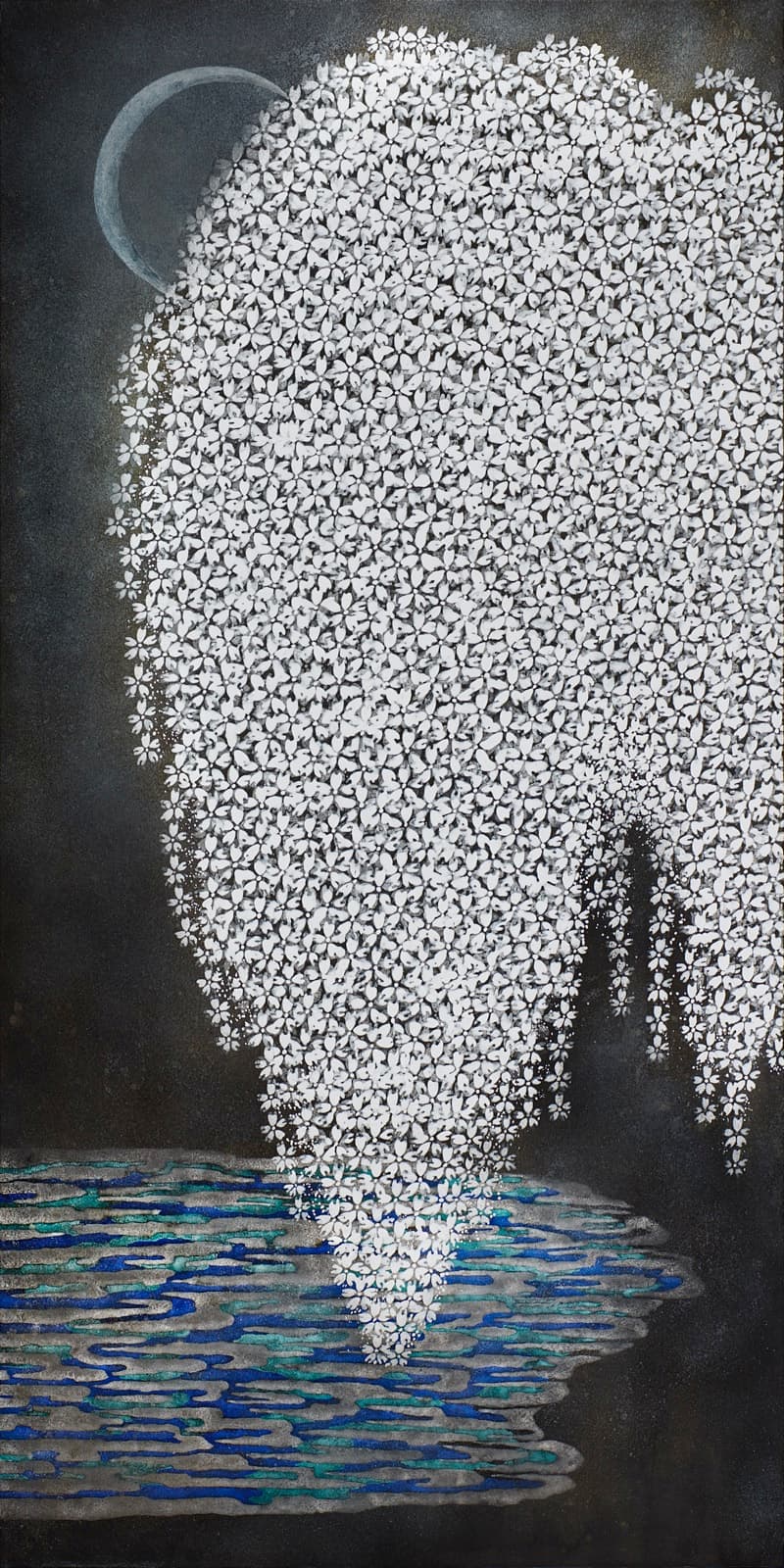
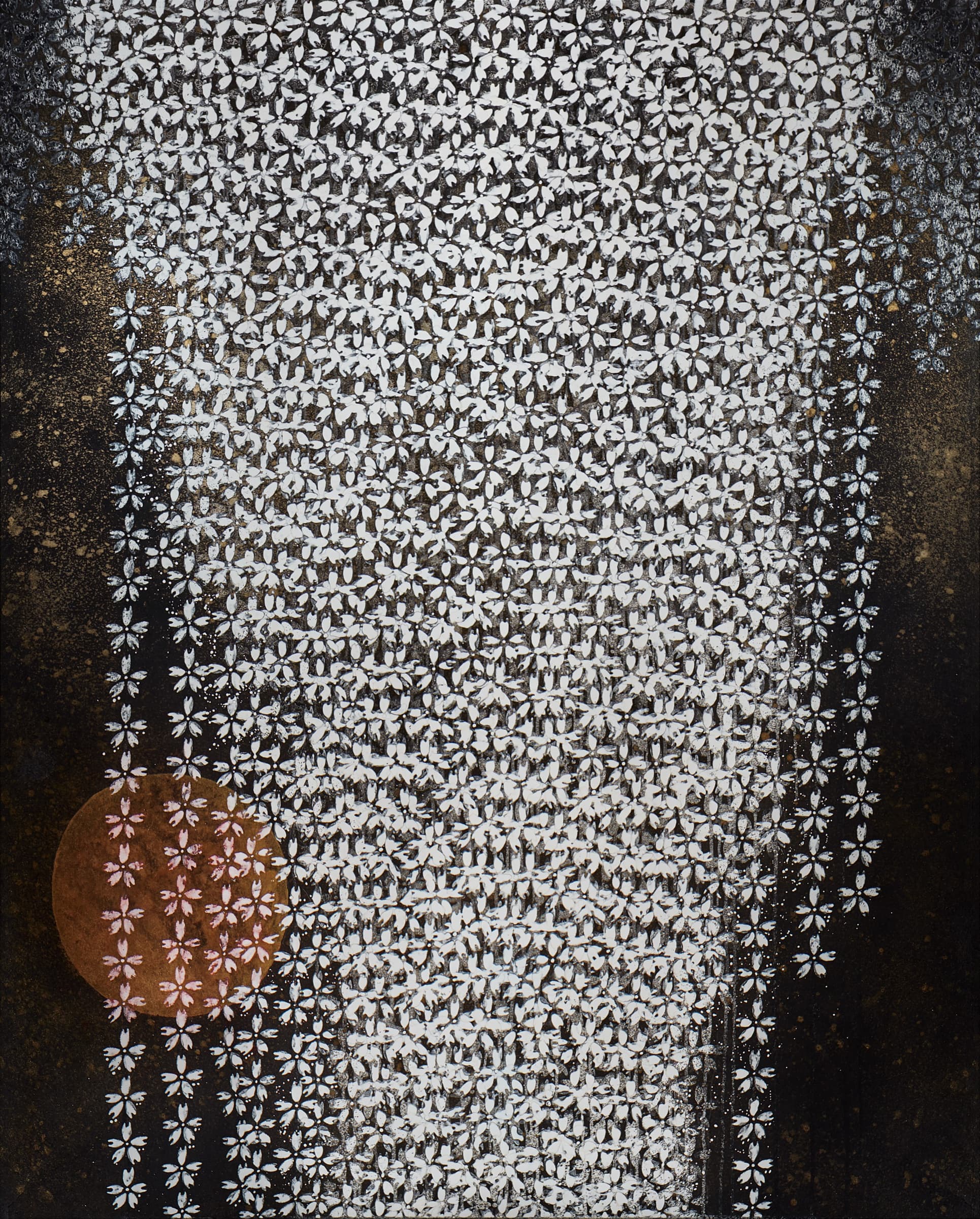
Folding screens more than four meters wide, carrying tens of thousands of cherry petals, and a world built from the finest line drawing. A Nihonga painter who never stopped reaching for the international stage.
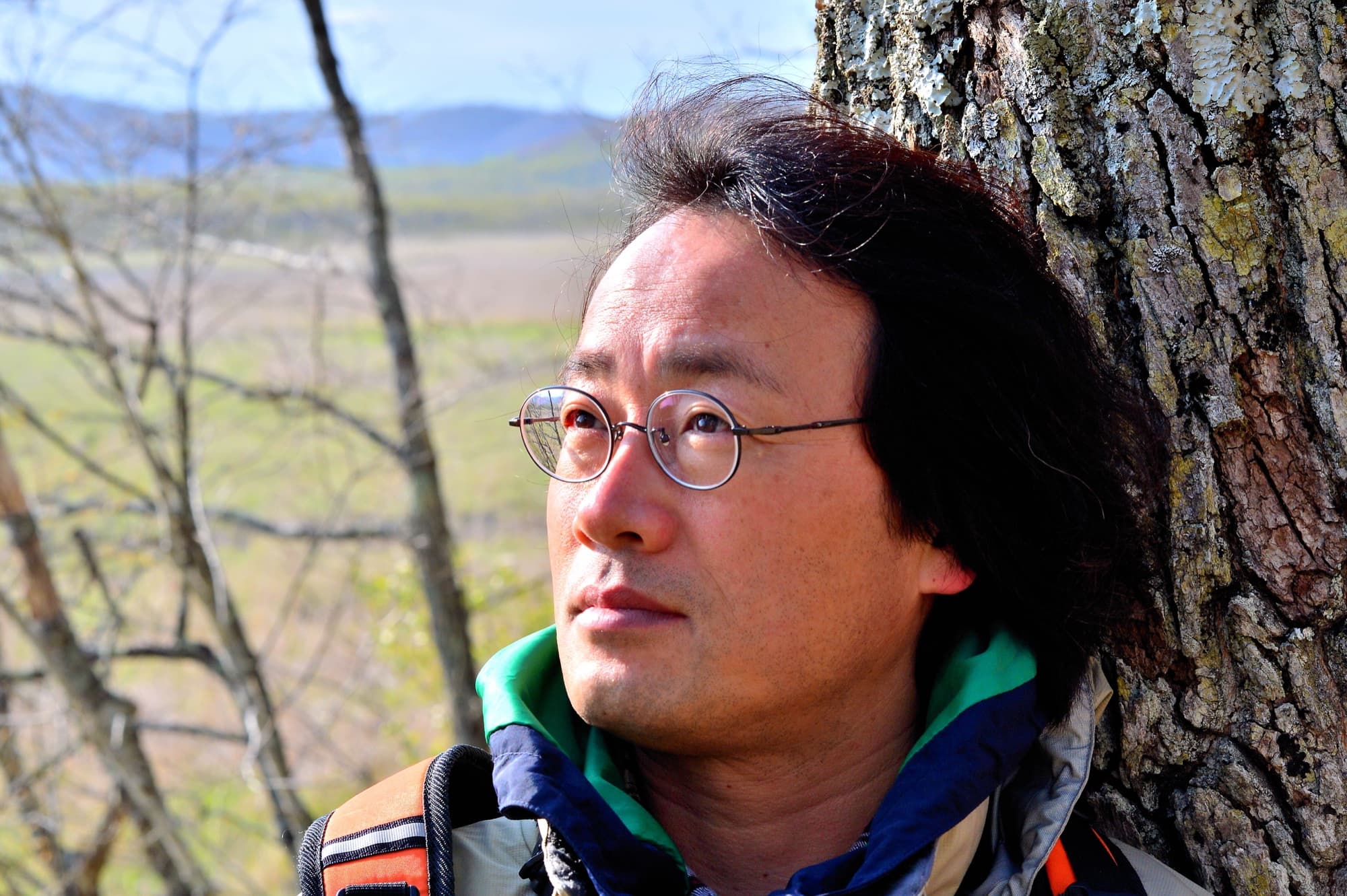
Born in Miyagi Prefecture in 1957. Graduated in 1982 from the Nihonga course, Department of Painting, Tama Art University, and completed the master's program in Nihonga at the university's Graduate School of Art in 1984.
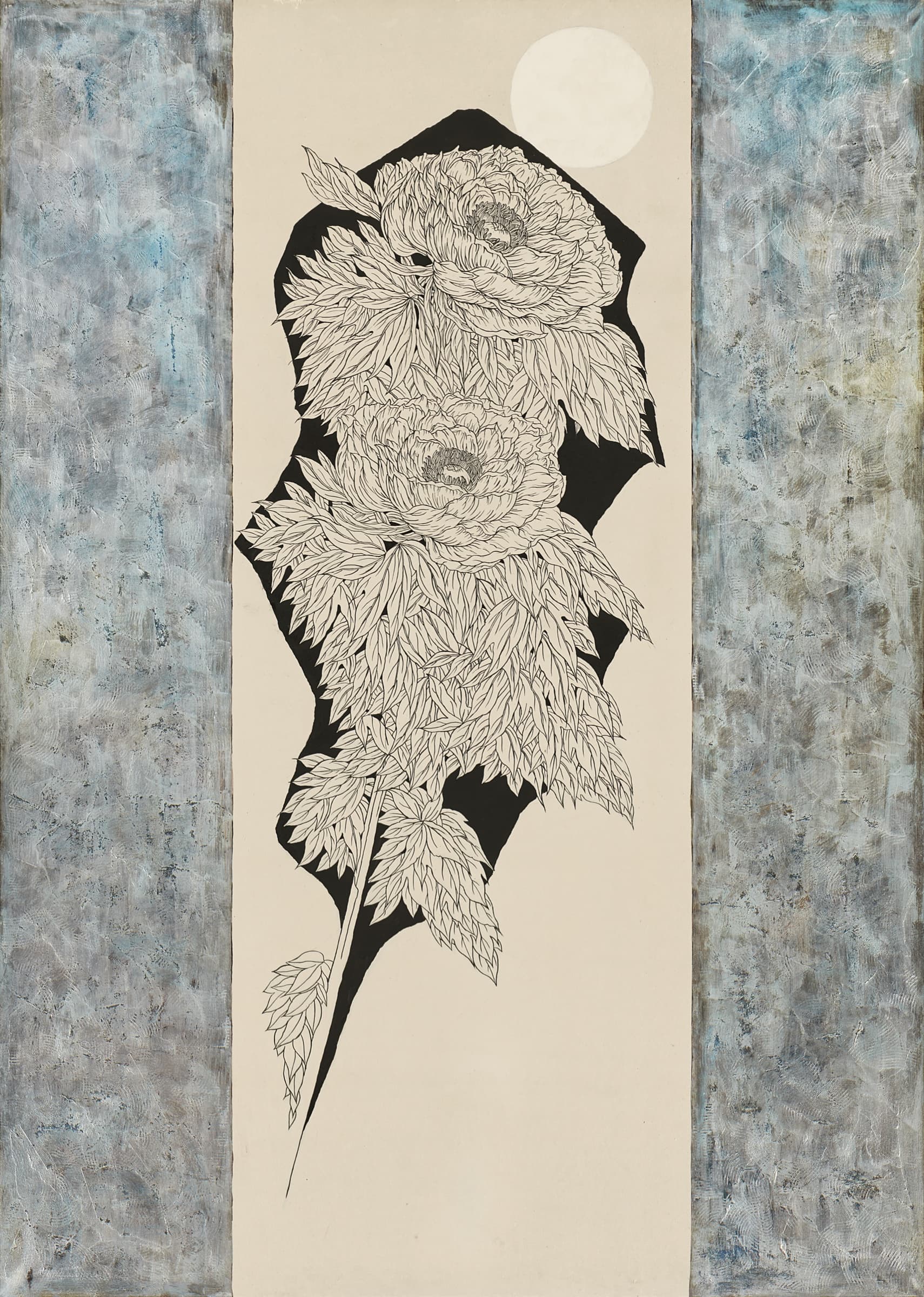
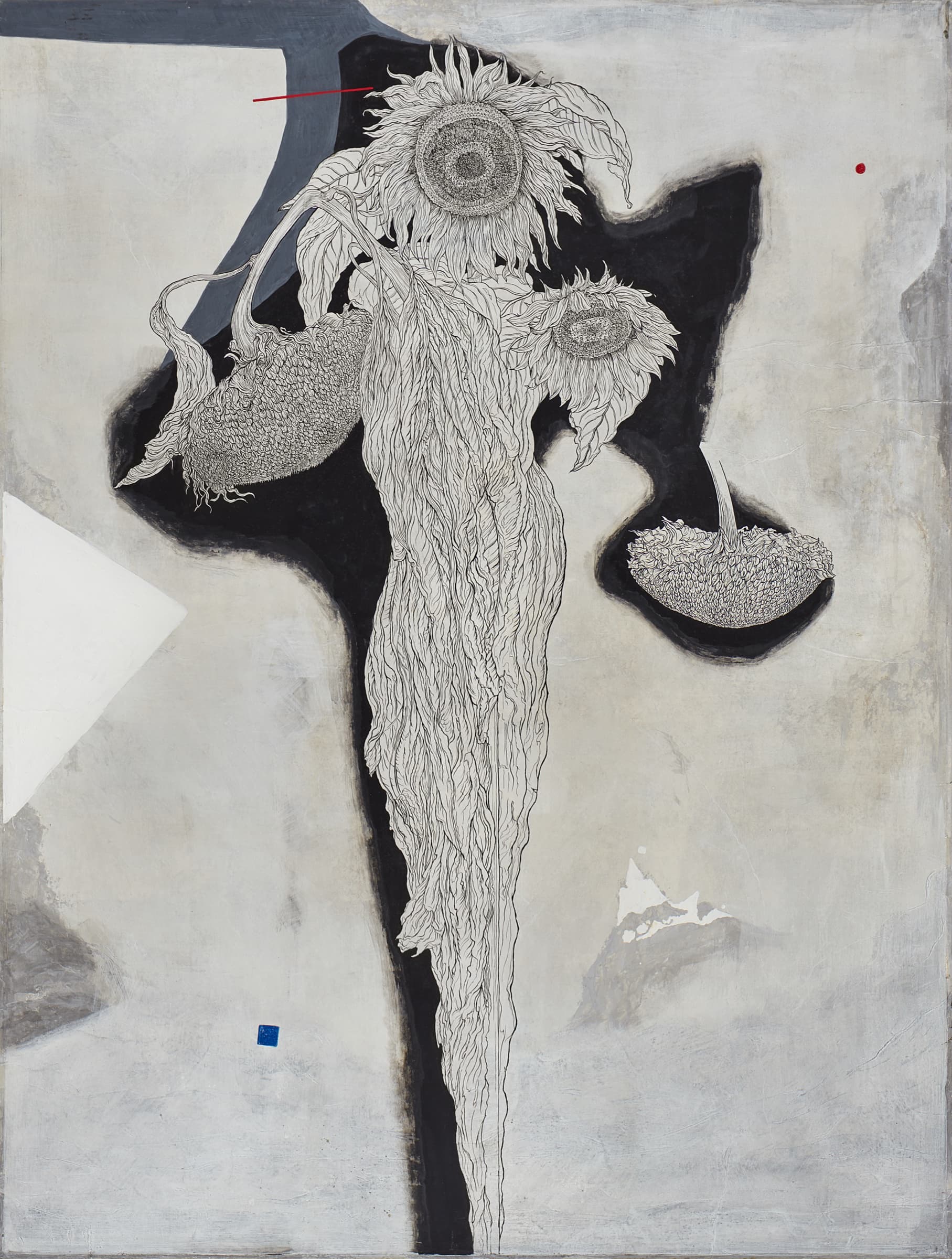
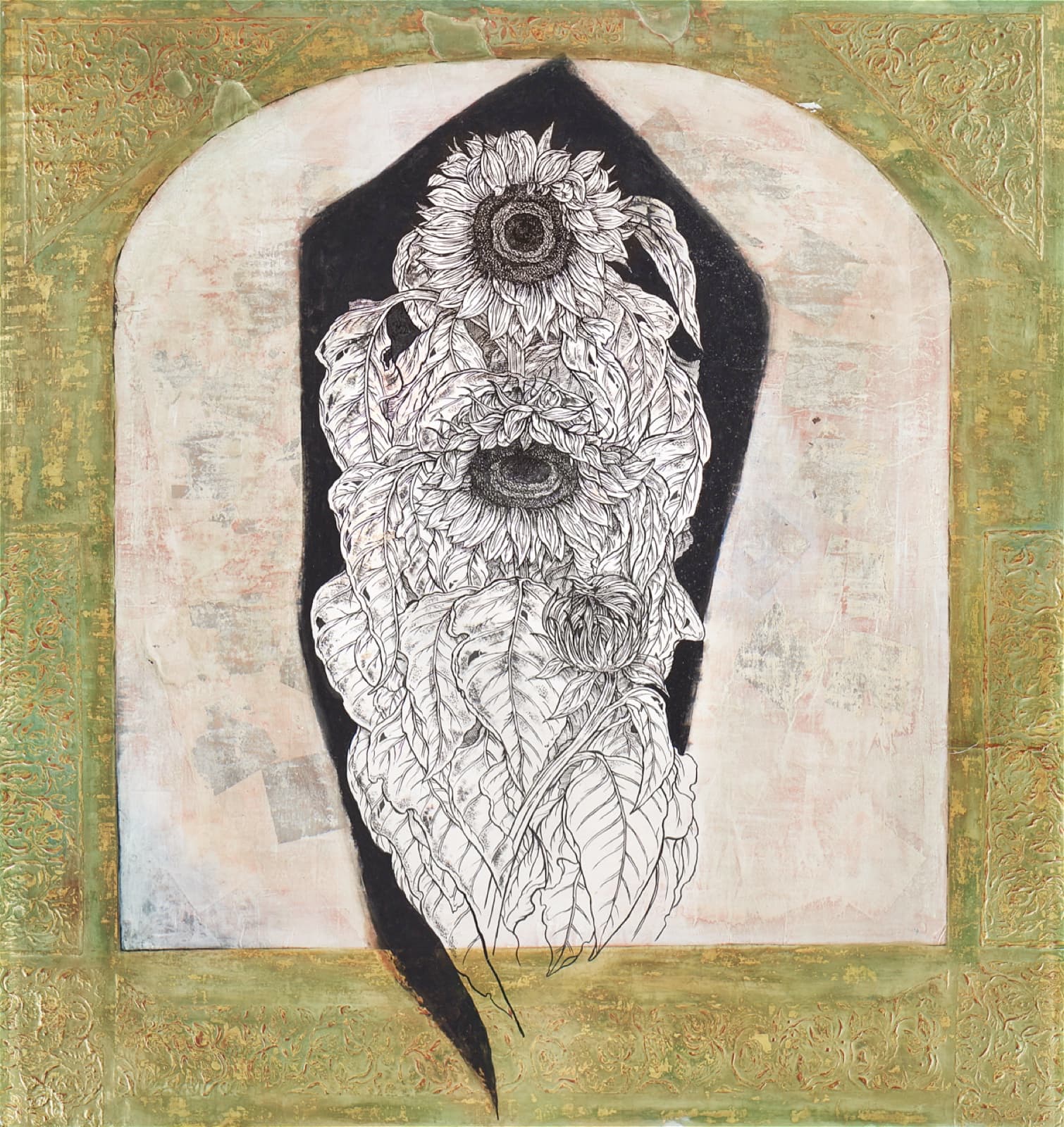
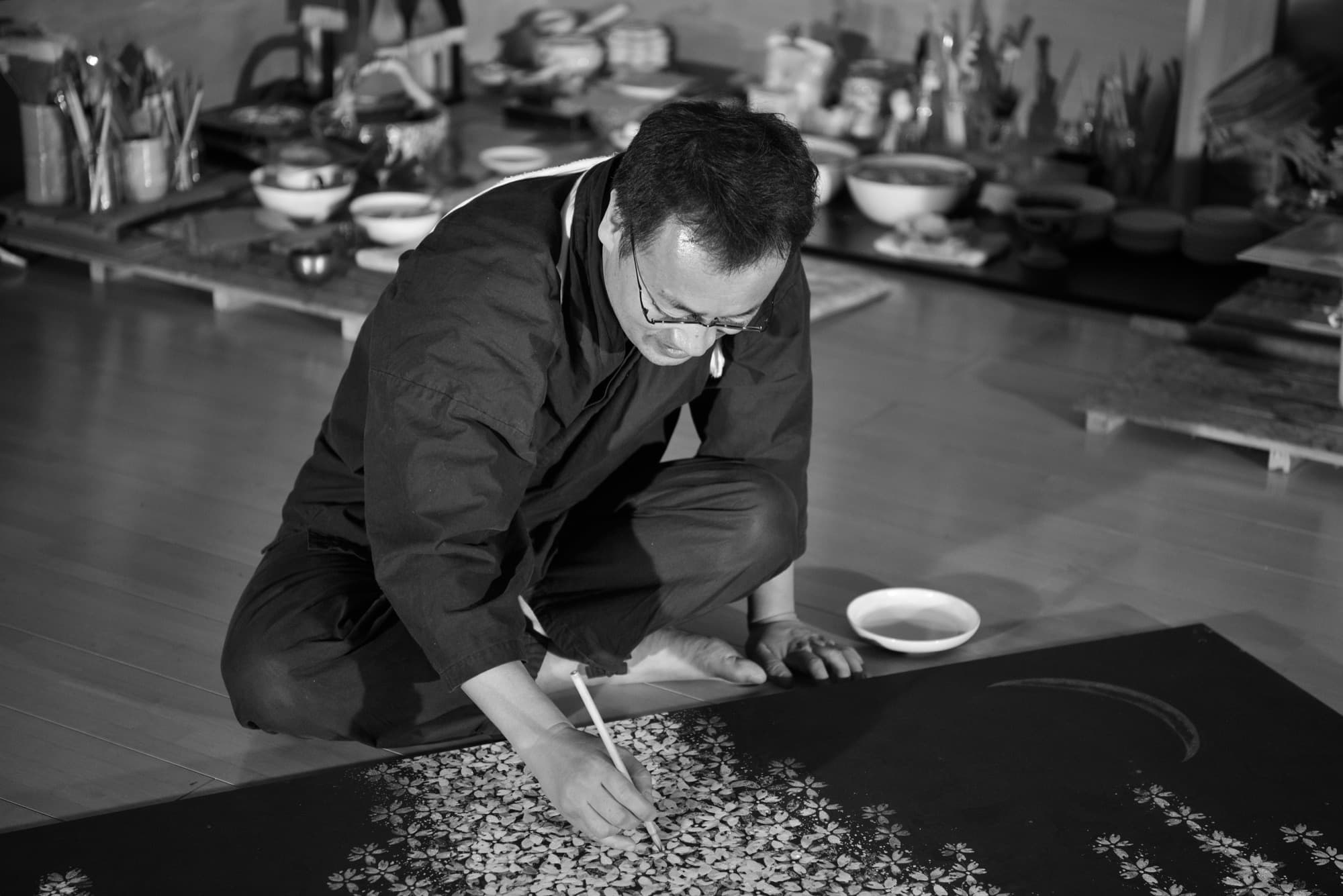
After graduate school he painted and exhibited without pause, and from 2000 built his practice around two solo exhibitions a year while showing at art fairs abroad in New York, Paris, Madrid and Seoul. From his studio in Ranzan, Saitama Prefecture, he kept opening new ground in Nihonga: a world of delicate line drawing drawn from the nature around him, and folding screens more than four meters wide covered with tens of thousands of cherry petals.
In February 2019 he brought a solo exhibition at the Hispano-Japanese Cultural Center of the University of Salamanca, Spain, to a successful close. That April he died suddenly at his studio in Ranzan, aged 62.
The works are cared for by the artist's family and continue to be shown through exhibitions and published catalogues. All images and photographs are reproduced by permission.
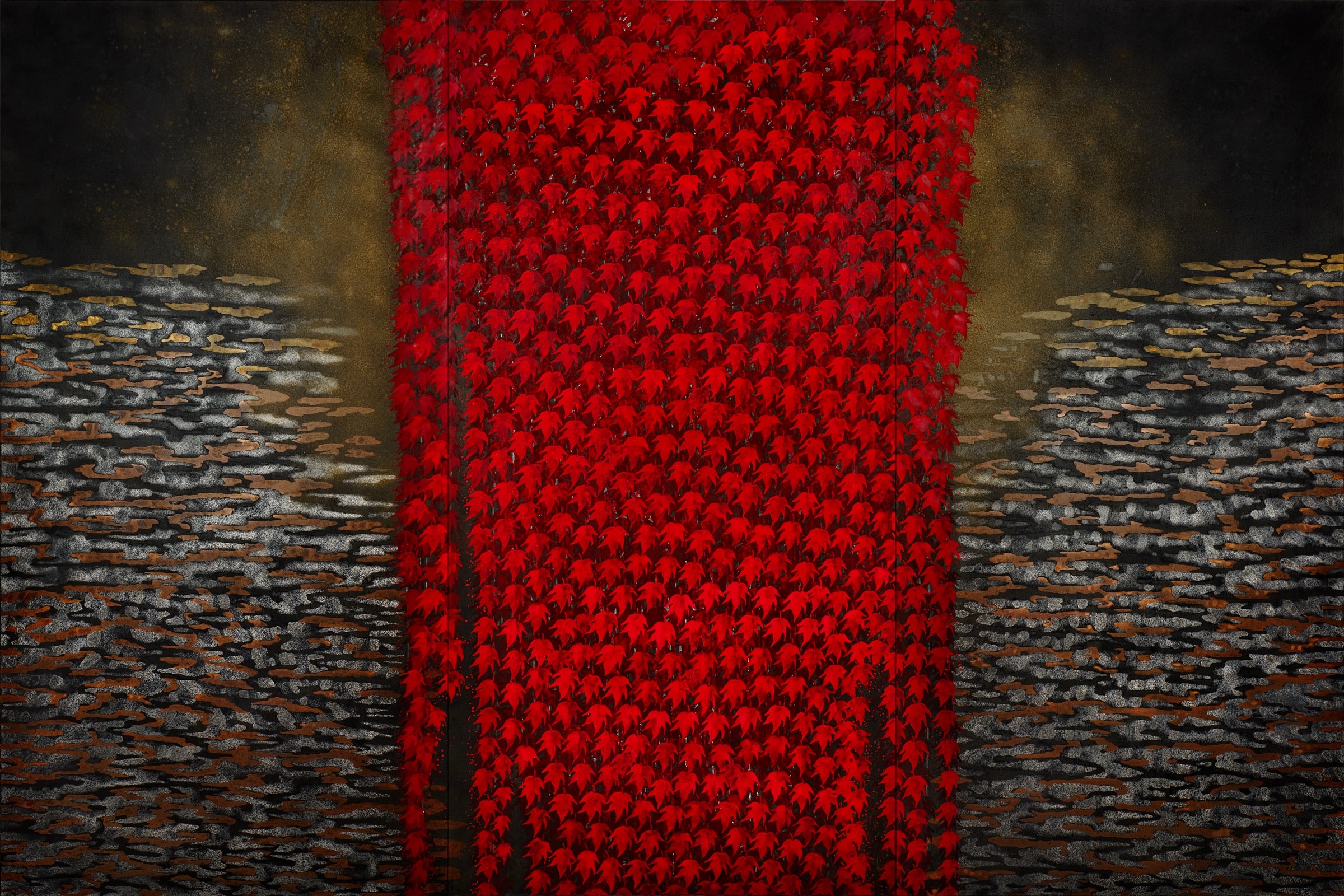
《The Greatest Place》2015 Three-panel folding screen; ink, gold and colors on Japanese paper 180 × 270 cm
Selected Works
Story
The Autumn He Was Seventeen
It all began in the autumn of his seventeenth year. Without that encounter, the Nihonga painter Hiromitsu Kato would never have existed.
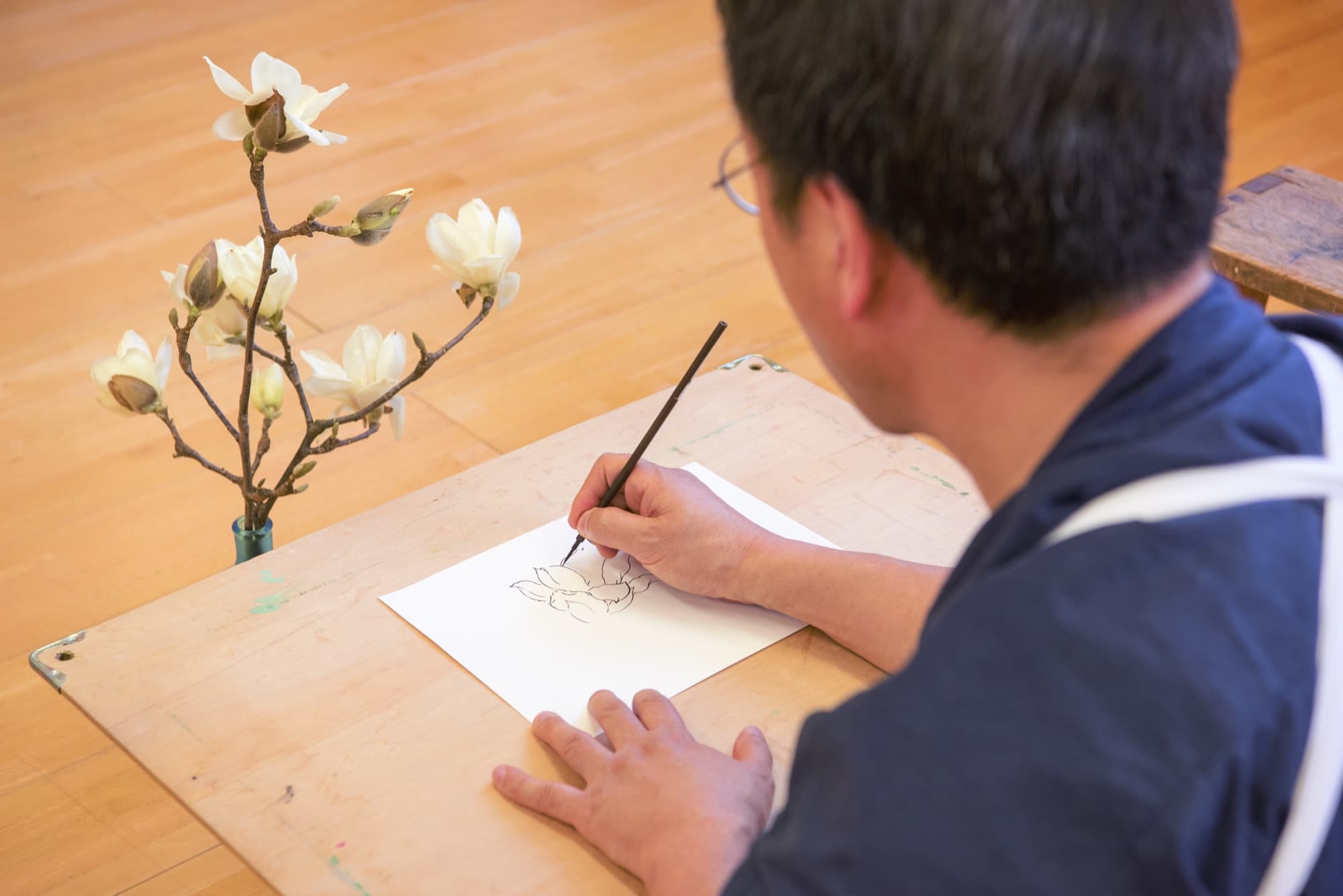
He had loved to draw since he was small. A black line runs across a sheet of white paper, and a world is built. Animals that could not exist, plants of impossible shape — on paper they were unmistakably real. There was freedom there.
One day his mother told him to go to kindergarten, and he refused outright. He would not be able to draw, he protested, until his mother lost patience: “If you won't go to kindergarten, I'll shut you in the storehouse.” In those days an old earthen storehouse stood in the garden of the Kato house. But he was not like other children. He took up paper and a pencil and walked into the storehouse himself. He did not come out until the sun went down.
From the moment he decided to be a painter he set his sights on an art university in Tokyo, but he could not settle on a department. The only technique he knew then was oil painting. Three months before the entrance examinations, in a department store in Sendai, he came face to face with Nihonga. Looking at it, he wept. He wept openly, in front of everyone. At seventeen he had found at last the technique fit for the world he carried inside him.
Recognition
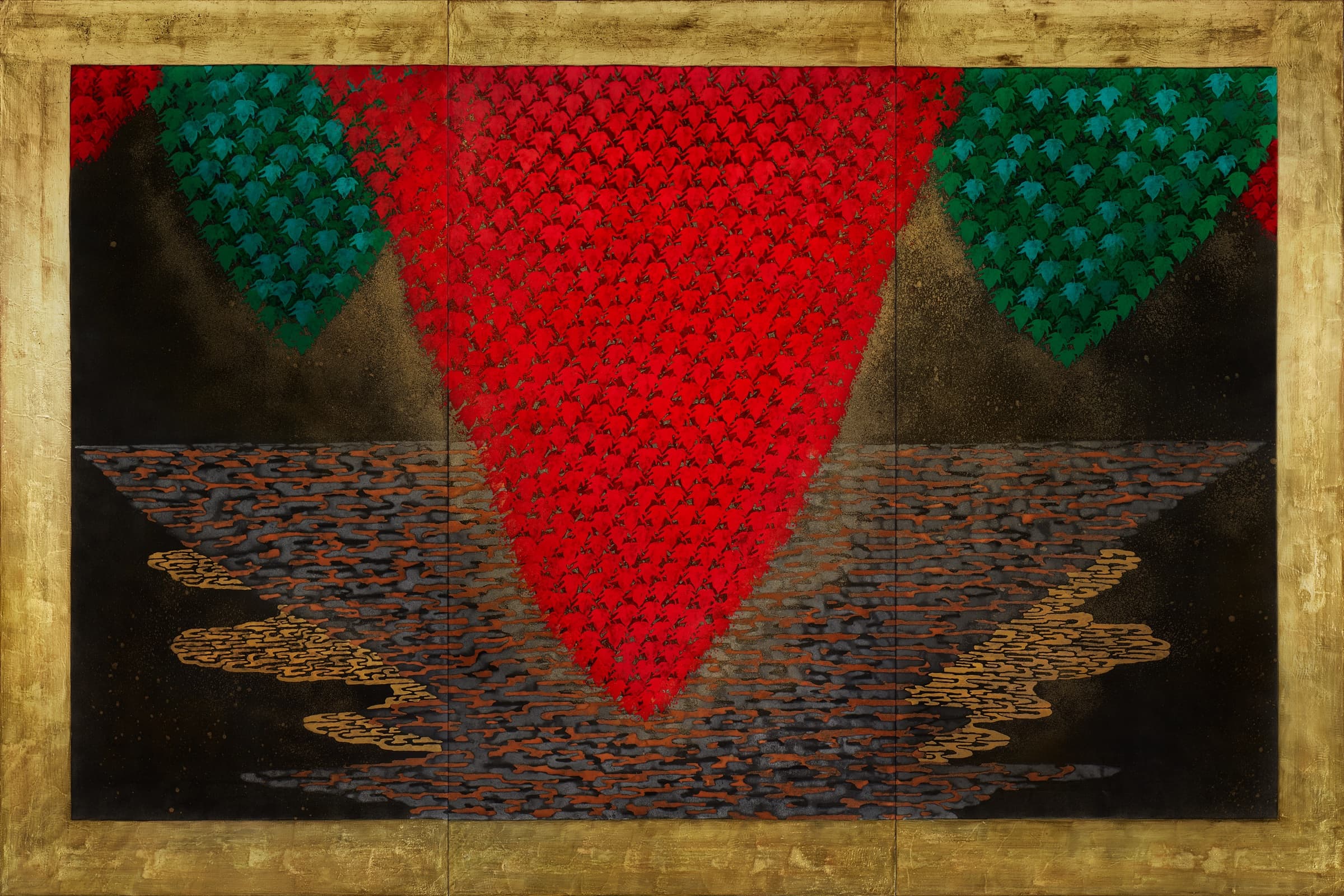
The flowers spring forward from a background of abstract texture, an image of release. The line is exact and keen, carrying a decorative elegance of the kind Klimt drew.
Kato's black is beautiful. It is never the black of darkness. Within it, gold and silver are set faintly and by intuition, and to superb effect: each single cherry petal is brought forward.
Of the many painters who have come to Valencia, he is the one who conveys vision most forcefully. He commands the high skill of a Western master craftsman, and holds his focus on a beauty carried within the mind.
A superb technique and expressive power; every work is made with the whole of his attention, and with great elaboration.
Chronology
- 1957Born in Miyagi Prefecture
- 1982Graduates from the Nihonga course, Department of Painting, Tama Art University
- 1984Completes the master's program in Nihonga, Graduate School of Art, Tama Art University
- 1988–2003Exhibits at the Nitten and the Ueno Royal Museum Grand Prize Exhibition, among others
- 2000Solo exhibition at Dentsu Kosan Gallery, Tokyo. Holds two solo exhibitions a year from this point on
- 2009Travels to Europe for the first time, for an exhibition in Valencia, Spain. His meeting with a local critic proves a turning point
- 2011Begins the cherry blossom series built from countless petals, moving beyond his earlier line-based manner
- 2019Solo exhibition at the Hispano-Japanese Cultural Center, University of Salamanca, Spain. Dies suddenly that April at his studio in Ranzan, aged 62
Inquiries about the works
We welcome inquiries about exhibiting, acquiring or purchasing. For a particular piece, please write to us from that work's page.