Oil painting 1881–1973
Pablo Picasso
パブロ・ピカソ
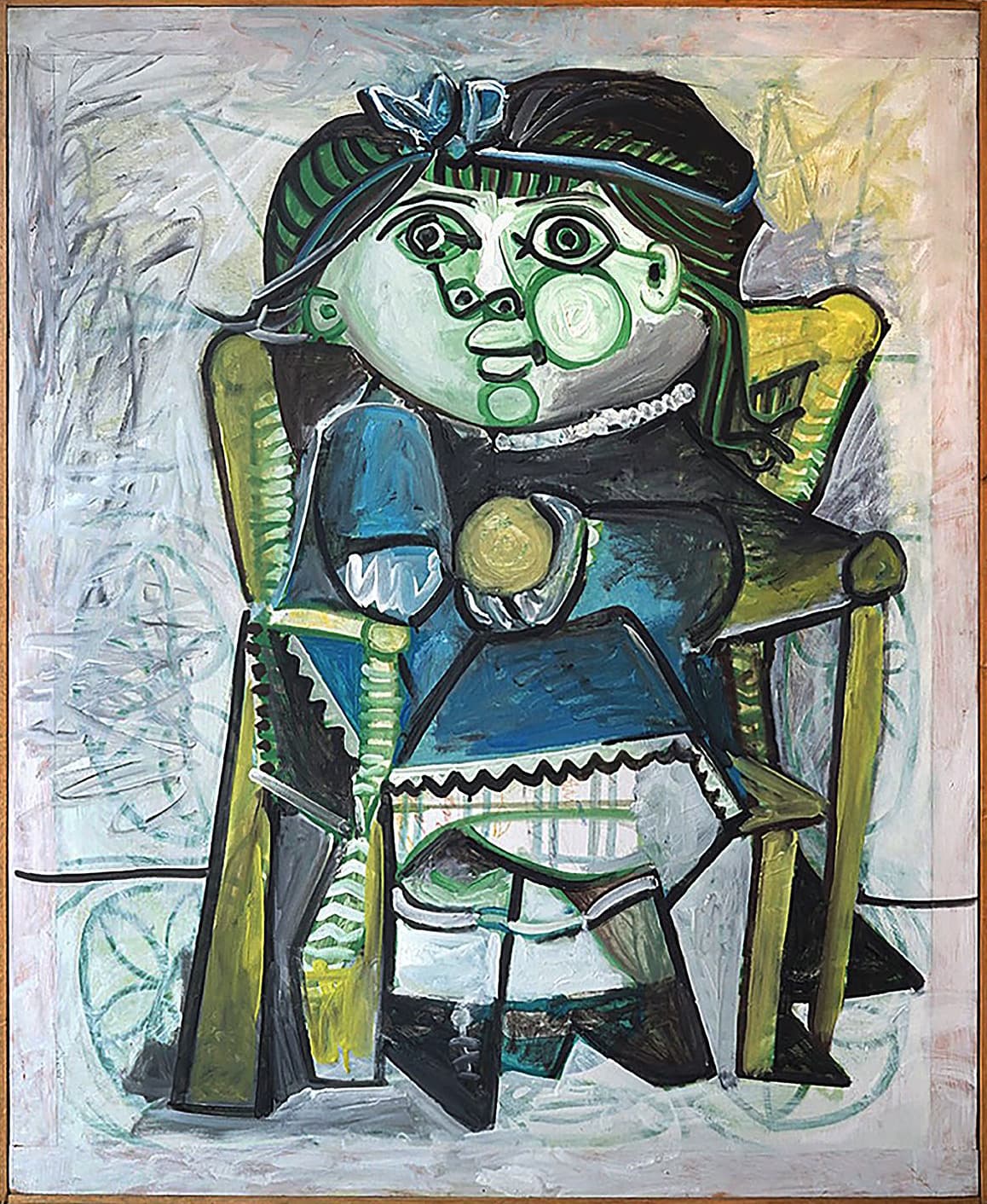
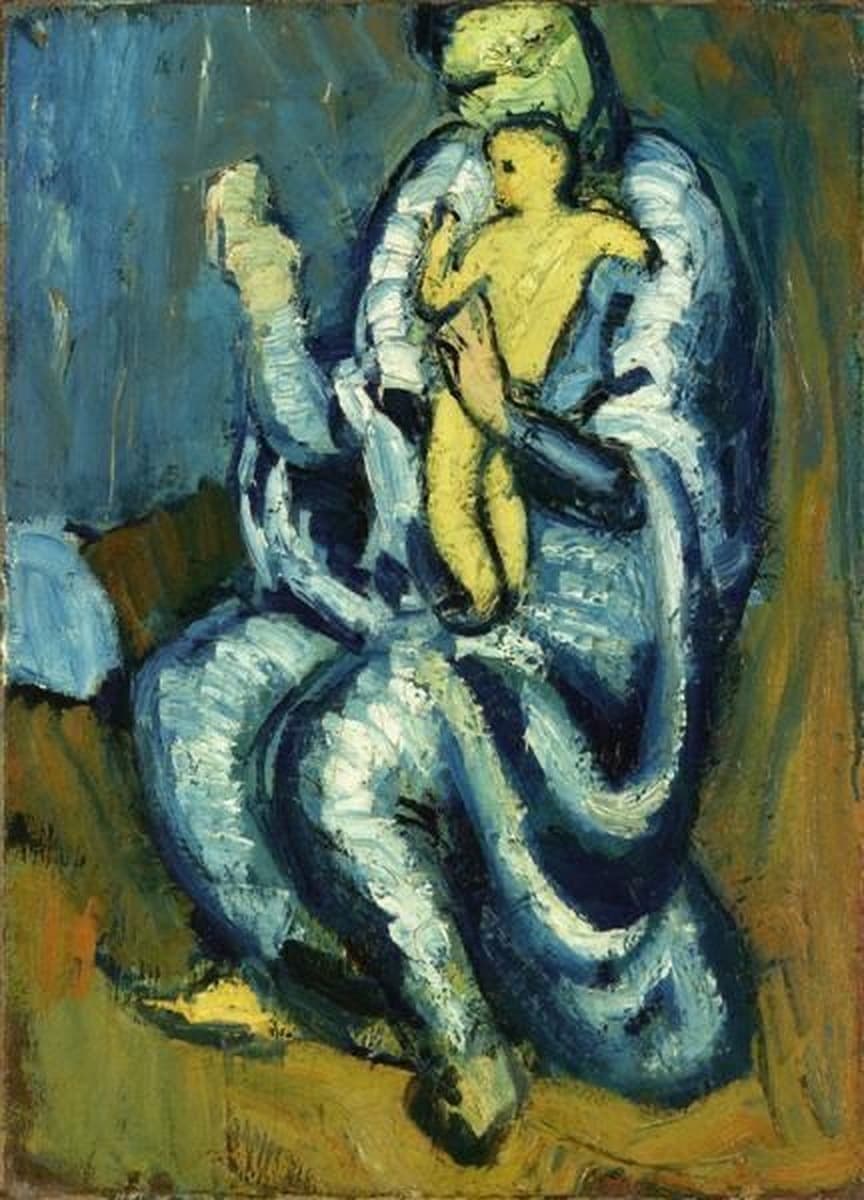
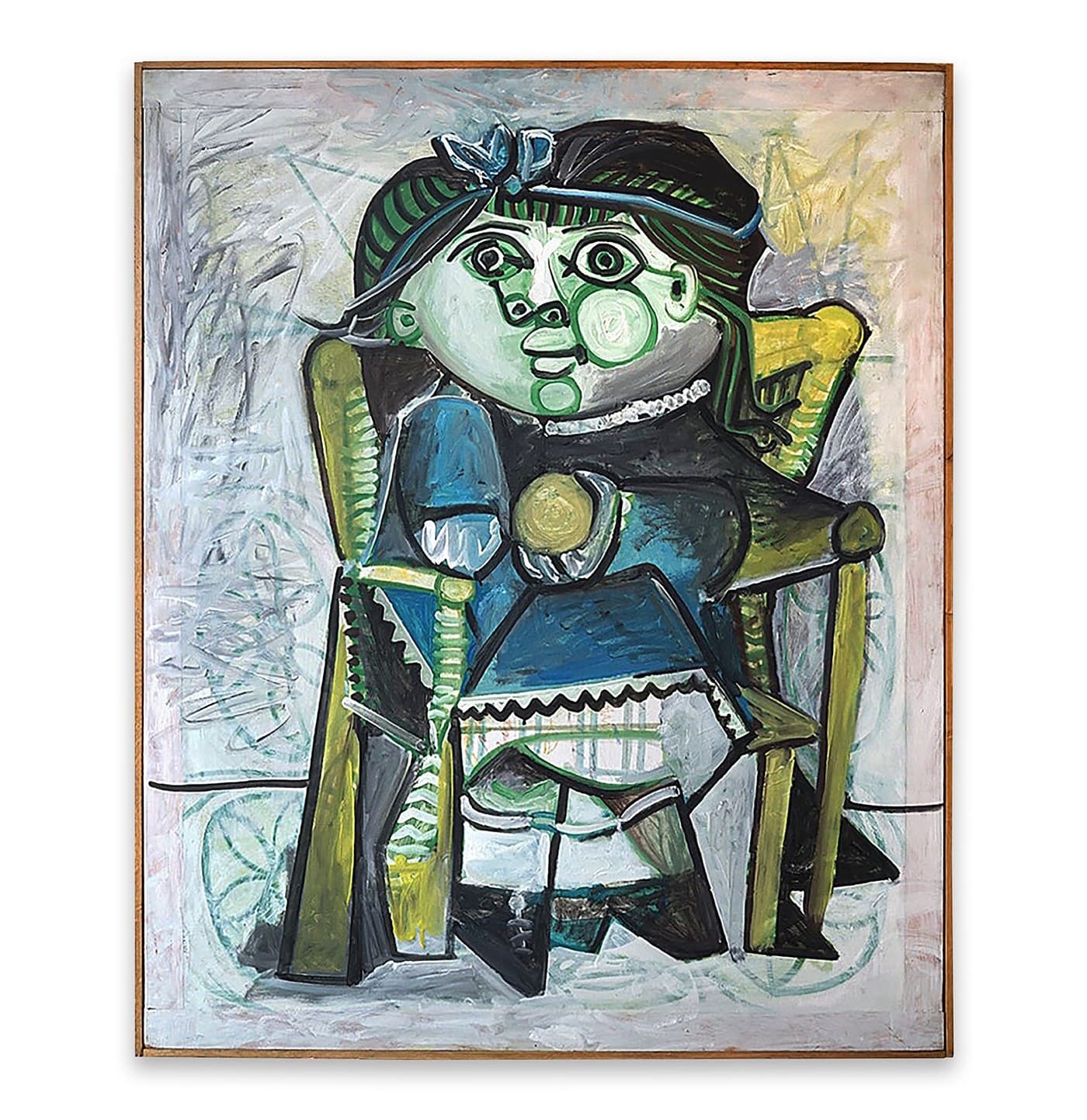
The greatest artist of the twentieth century. We handle Maternité (1901), painted at the dawn of the Blue Period; L’enfant à l’orange (1951), a portrait of his youngest daughter, Paloma; and Le Peintre, a late oil of 1967.
Pablo Ruiz Picasso was born in Málaga, Spain, in 1881. Extraordinarily prolific as a painter, draftsman, sculptor, ceramicist and printmaker, he explored every medium without fear and challenged the conventions of art at every stage of his life. He painted his first picture at the age of eight; his gift was evident from the start.
Between 1901 and 1904, deeply affected by the suicide of his friend Carlos Casagemas, he entered the Blue Period. Dominated by a cold, melancholy blue, these years took solitude, poverty and old age as their subjects. The Rose Period followed in 1905, bringing circus performers, acrobats and lovers onto the canvas, and with them a return of warmth and tenderness.
In 1907, Les Demoiselles d'Avignon marked a radical break with tradition and announced the beginning of Cubism. Working closely with Georges Braque until 1914, he dismantled classical perspective and rebuilt space through geometric fragmentation, laying the foundations of the most influential movement in modern art.
In the 1920s his work changed again, at times taking in the dreamlike language of Surrealism, though Picasso never confined himself to a single movement. His political engagement deepened as he responded to the rise of fascism in Europe. In 1937 he painted Guernica, a monumental and anguished answer to the bombing of the Basque town by Franco's forces. The picture became at once a universal symbol of horror and of resistance.
After the Second World War he settled in the south of France and immersed himself in ceramics, above all at Vallauris. The work of these years is more spontaneous and more playful, often drawing on the innocence and directness of children's drawings. To the end of his life Picasso worked with undiminished energy, revisiting the old masters, reimagining form and gesture, always in pursuit of a renewal of art.
Often called the greatest artist of the twentieth century, for his formal invention as much as for the breadth of his practice, Picasso changed our understanding of art itself. He died at Mougins in 1973, leaving behind an immense, protean and timeless body of work.
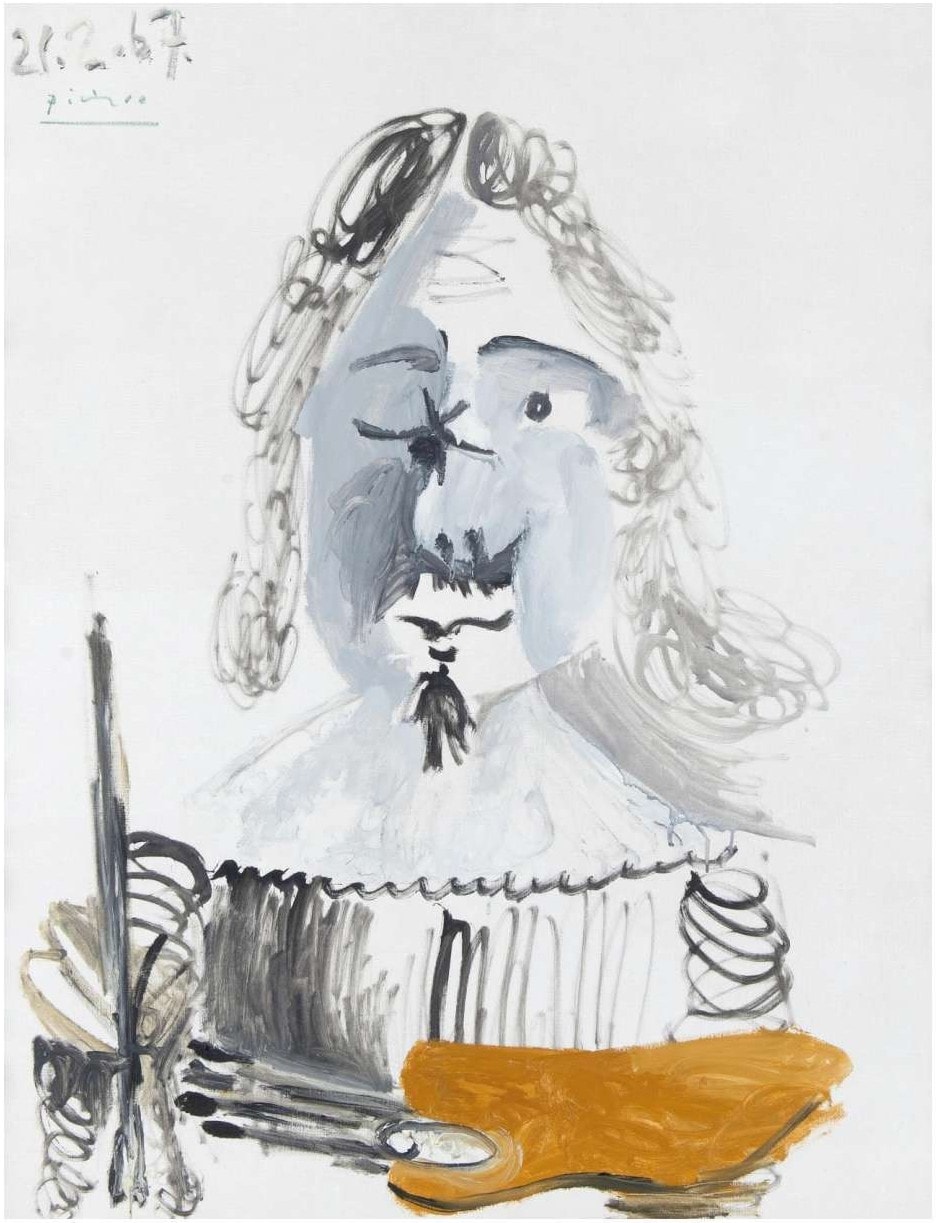
《Le Peintre》1967 Oil on original canvas 100 × 81 cm
Inquiries about the works
We welcome inquiries about exhibiting, acquiring or purchasing. For a particular piece, please write to us from that work's page.