Article
Why Hokusai’s paintings from his own hand are not known
Say Hokusai and you think first of prints. Under the Wave off Kanagawa has become one of the best-known pictures in the world. Yet almost nothing is said about the works he painted directly on paper with his own brush. The same painter; the same hand.
Supervised by Yoshihisa Endo, Representative Director, Japan Art Academy
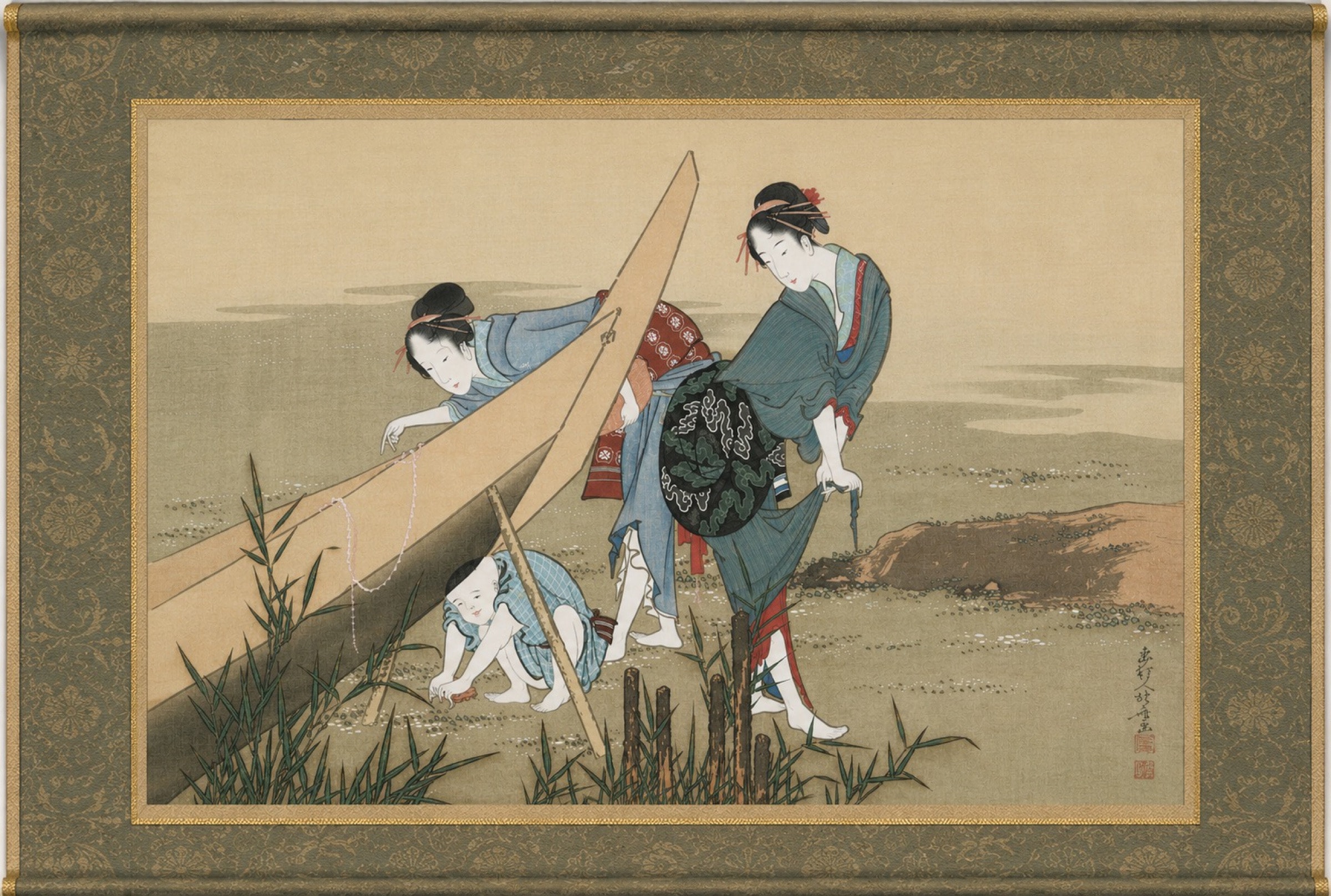
What separates a print from a painting
An ukiyo-e print is not the work of one man. The artist draws the design, the carver cuts the blocks, the printer lays colour after colour onto the paper. Three trades divide the labour, and the same image is made in its hundreds. That is how Under the Wave off Kanagawa reached the whole world.
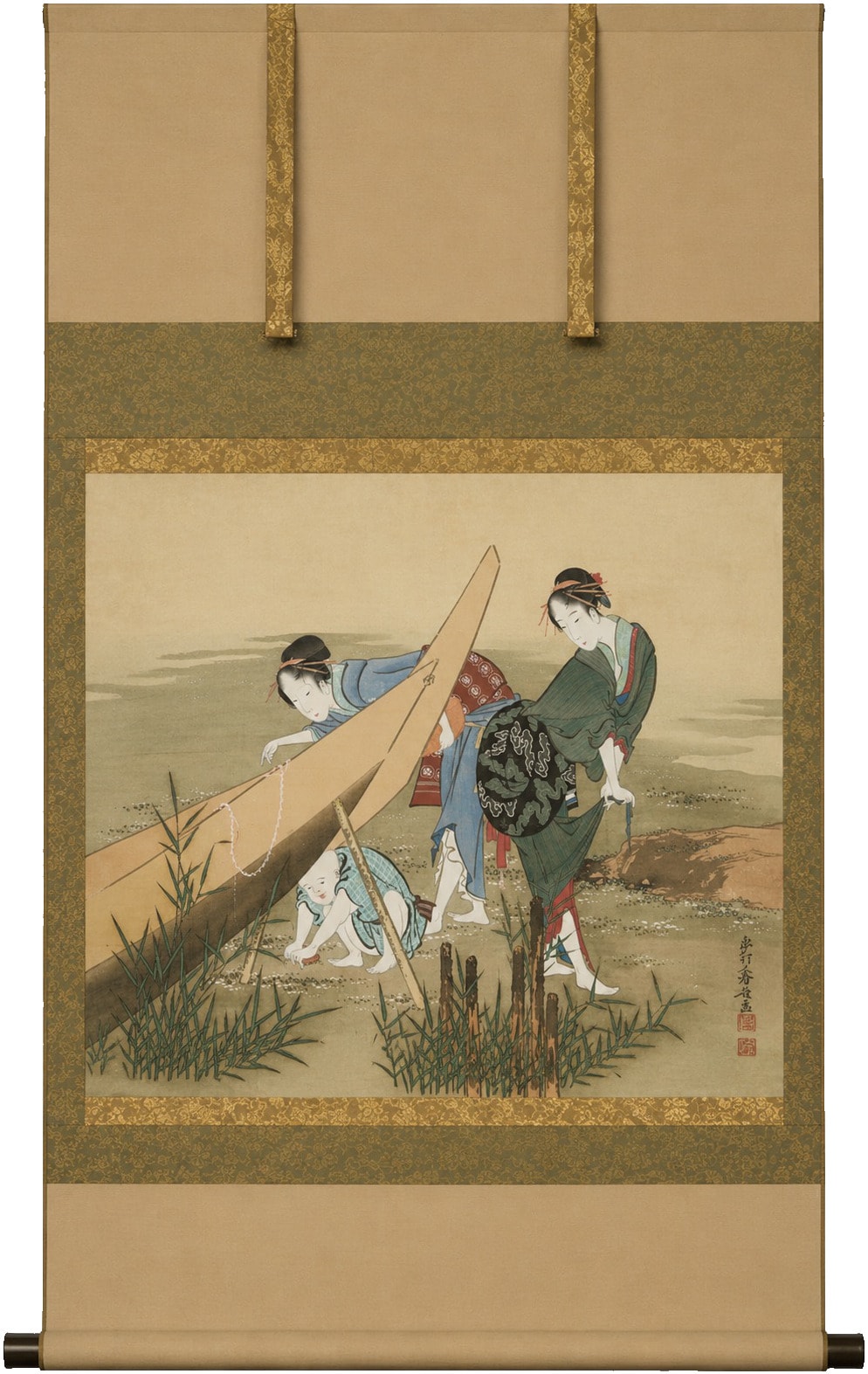
A hand-painted work is another matter. The artist sets the brush straight onto paper or silk, and only one exists. No carver, no printer: what remains is Hokusai’s hand itself.
Sealed away inside the museums
The paintings in which Hokusai’s breath can be felt directly have remained quietly in museums in Japan and around the world, as if sealed away. They have scarcely appeared in the history of painting either.
The reason is simple. Prints were pulled in their hundreds and scattered across borders. A painting exists once. What exists once stays with its owner, and without the occasion of an exhibition a century can pass without anyone seeing it.
Being unknown and being of little worth are two entirely different things.
What Paris learned was line
The Hokusai Manga, which he began completing in his fifties, runs to fifteen volumes and some four thousand nine hundred figures. It is not manga in today’s sense but a compendium of models: how to draw people and animals, waves and landscapes.
In Paris it was called “Hokusai’s drawings,” and it had a powerful effect on young painters. What Degas, Monet and Cézanne took from him was his way of working in series, his way of drawing a line, his way of rendering water.
None of that is a matter of printed colour or composition. It is a matter of how the brush moved across the paper.
And the thing those painters across the sea were captivated by survives most rawly in the hand-painted works.
“Past a hundred, my pictures will move as if alive”
Hokusai left words to the effect that past seventy he would master the secrets of painting, and that past a hundred his pictures would move as if they were alive.
They are the words of a man who lived ninety years, changed his painting name some thirty times, and said to the end that it was not yet enough.
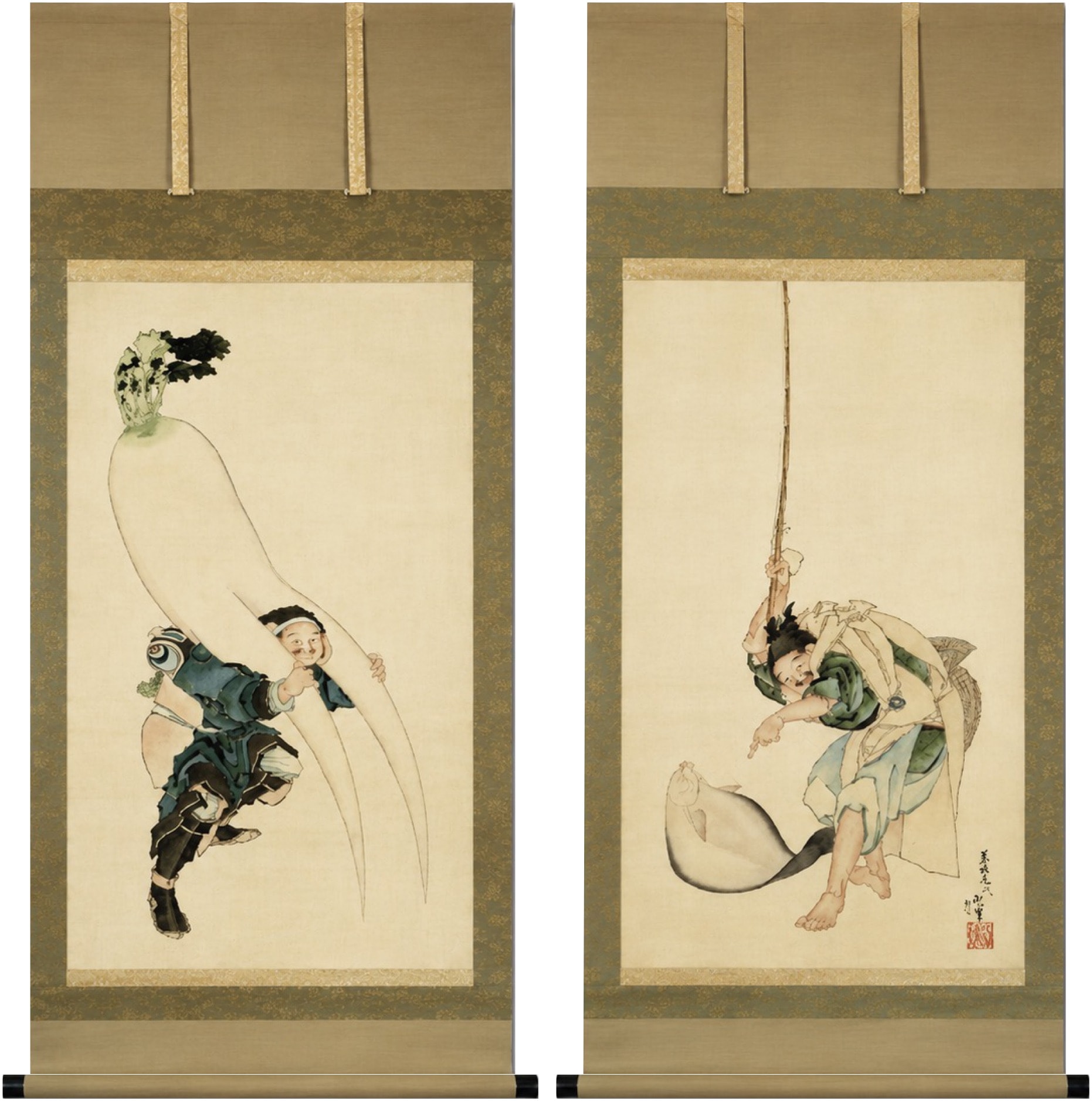
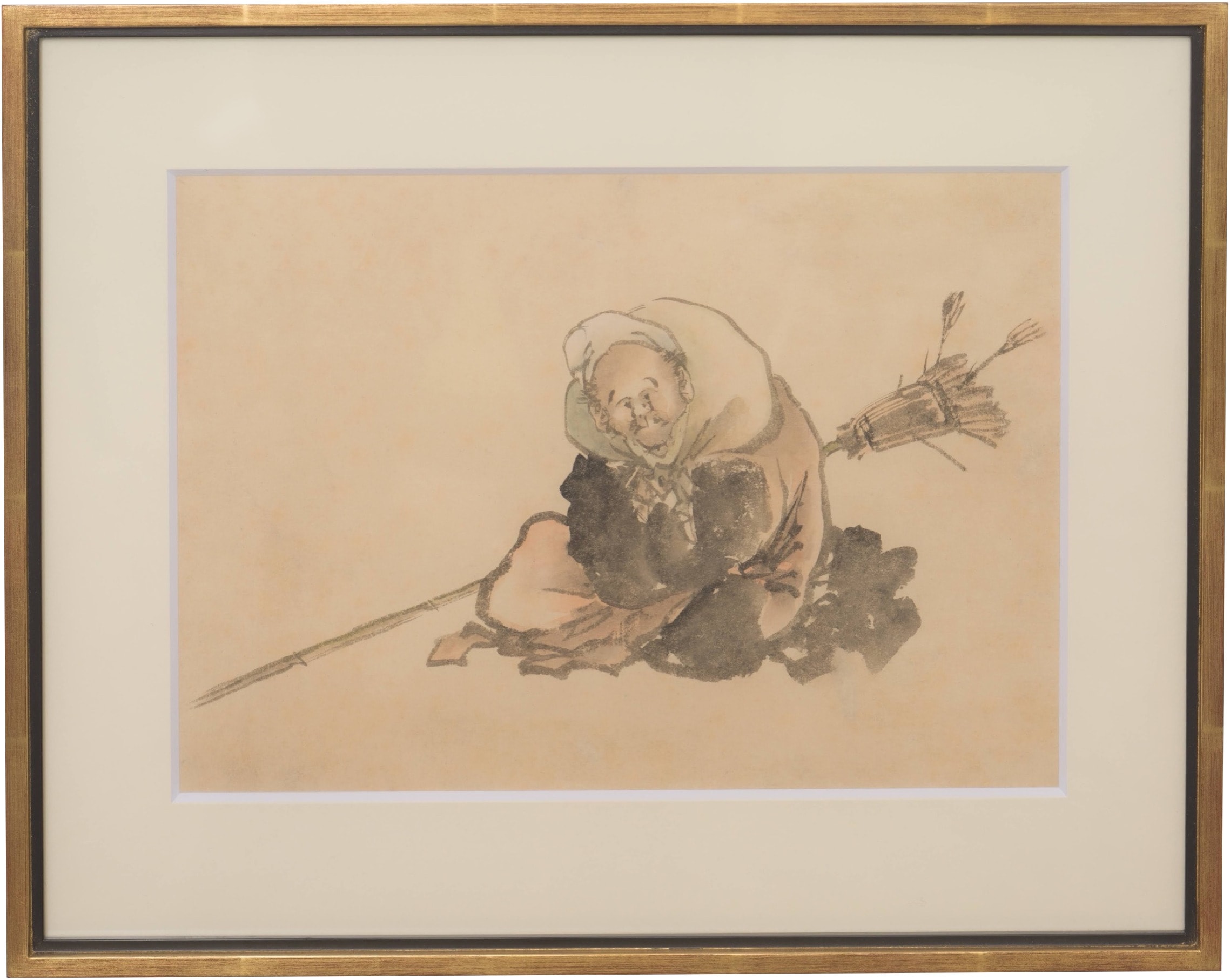
Daikoku with a Forked Radish / Ebisu with a Flounder (pair)
二股大根と大黒天/鮃と恵比寿天(双幅)
各73.0 × 30.8 cm
A pair of scrolls signed at the age of eighty. On the right-hand scroll, Ebisu points at the flounder he has landed.
View this workThose words take form in this pair of scrolls. Daikokuten, carrying an enormous forked daikon, about to stride off; Ebisu, pointing at the leap of the flounder he has caught. Both are among the seven gods who bring good fortune.
In the corner is the signature and seal — the rakkan — reading “brush of Gakyō Rōjin Manji, aged eighty.” Gakyō Rōjin Manji, the old man mad about painting, was the name Hokusai took in his last years. A picture painted by an eighty-year-old hand, and it moves.
Standing in front of one
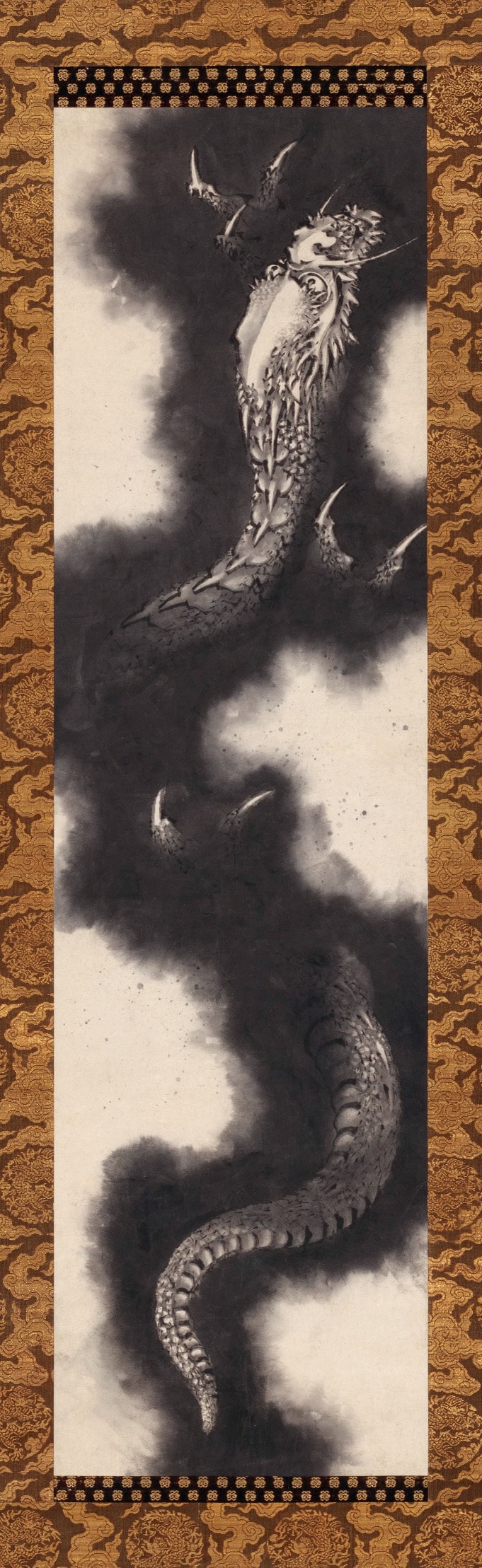
Ascending Dragon
昇龍図
102.4 × 27.9 cm
A dragon rising through black cloud, a subject Hokusai loved all his life.
View this workStand before a painting from his own hand and you can see where the brush entered, where it changed speed, where it left the paper. None of that survives in a printed line. The difference between a line drawn with held breath and one pulled away in a single movement goes straight to the eye.
The feeling Hokusai meant when he said “past seventy” was most likely there.
The whole world knows Hokusai the printmaker. Not many have met Hokusai the painter. The gallery handles his hand-painted works and fan paintings, and viewings can be arranged through the inquiry form.
Supervising editor
Yoshihisa EndoJapan Art Academy Representative Director
Born in Nishi-Azabu, Tokyo, in 1940. After graduating in French literature from Chuo University and a period in business, he founded a video production company. Negotiating directly with the Louvre, the Prado, the Hermitage and other museums, he filmed their collections in high definition for series such as The Museums of the World (1991), and published a multi-volume museum encyclopedia with twenty professors led by the art historian Seiro Maekawa.
He has produced or supervised more than a thousand television programmes on art (The World's Masterpieces on BS Asahi and Painter × Painter on BS Nippon TV among them), and his books include Letters from Vermeer and Lautrec and Mucha (Random House Kodansha) and a study of the Hokusai Manga (Kawade Shobo Shinsha). He is representative director of the Japan Art Academy (founded 2010) and a director of the International Hokusai Society (founded 2019). As a filmmaker he works under the name Hisashi Fuji.
The Japan Art Academy (founded 2010), which plans and supervises this series, works in art film and publishing, and established the International Hokusai Society in 2019. Based in Nihonbashi Odenma-cho, Tokyo, it carries out research on Hokusai's hand-painted works and compiles catalogues of them, and supervises the colour of the reissued Thirty-six Views of Mount Fuji printed by Takahashi Kobo. In 2026 it published Exploring the Appeal of Hokusai's Original Paintings, a catalogue of hand-painted works that includes pieces never shown before, edited and written by its executive director, Hiromi Yasui.
Credits
- Planning and materials
- International Hokusai Society, Japan Art Academy
- Supervision
- Yoshihisa Endo, Representative Director, Japan Art Academy