Article
Encounters That Change Creation
出会いが創造を変える
Steve Jobs and his wife visited the first Kyoto solo exhibition of the Ecchu-Seto ware potter Yukio Shakunaga, and he came three times in all while it was on. The notes in which, it is said, he asked about nothing but the clay; and what became of a black half-cylinder tea bowl. Here, just as it was written, is the essay by 金木 静, a friend of forty years.
越中瀬戸焼・釋永由紀夫の京都での初個展に、スティーブ・ジョブズが夫人と訪れ、会期中に三度足を運んだ。土のことばかりを問い続けたという筆談と、黒の半筒茶碗の行方。四十年の友人である金木静が綴った随筆を、そのままご紹介します。
The Japanese original is given sentence by sentence, each followed by its English translation.
About Yukio Shakunaga釋永由紀夫について
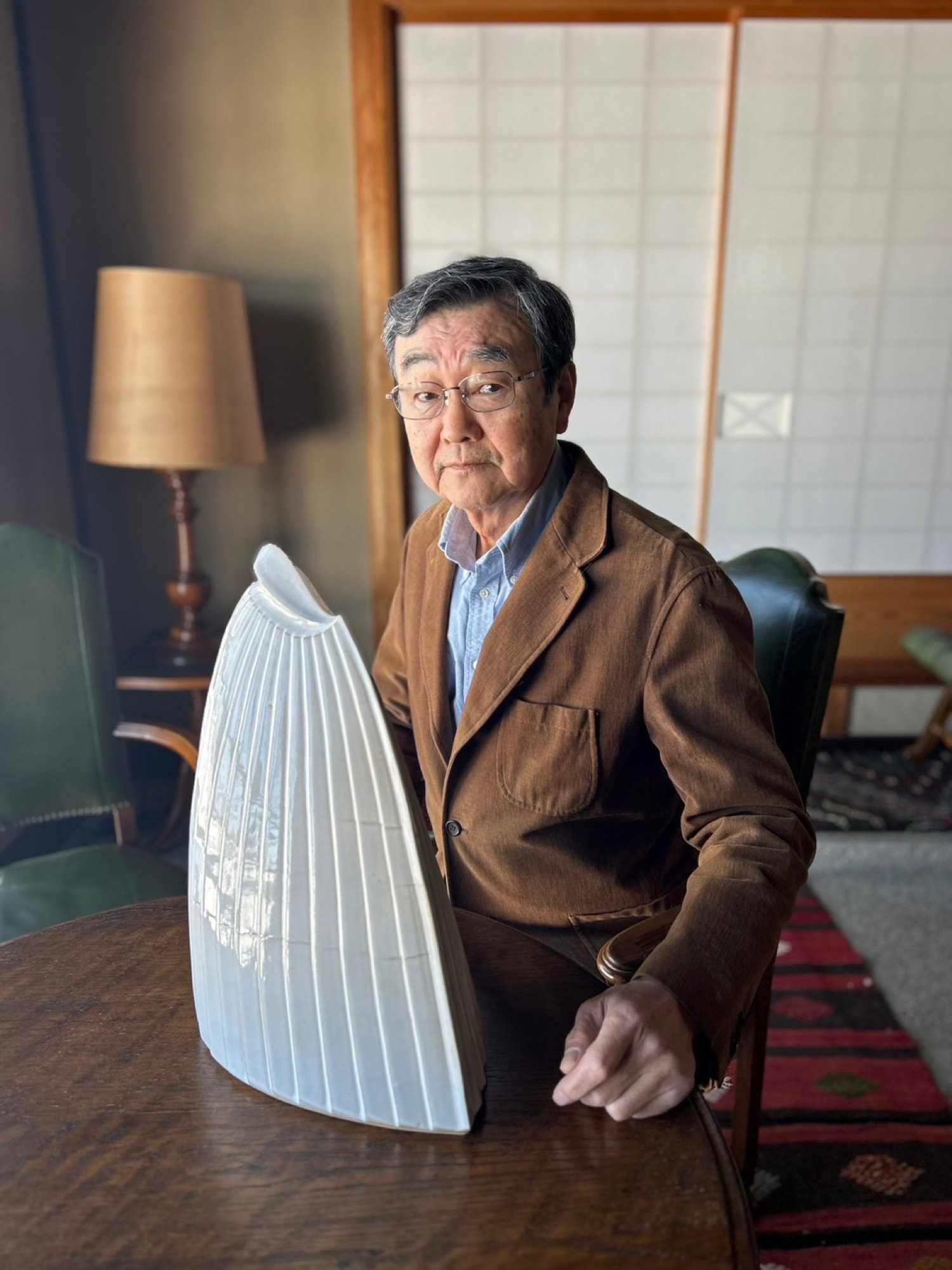
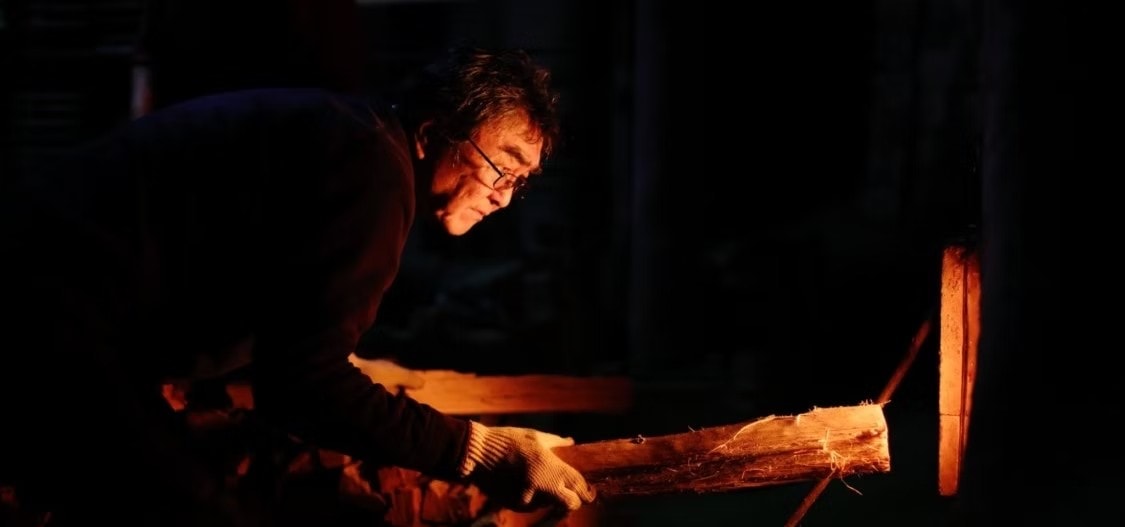
1954年、富山県立山町生まれ。Born in 1954 in Tateyama, Toyama Prefecture.
越中瀬戸焼の伝統を継ぐ窯元「庄楽窯」の二代目。He is the second-generation head of the Shoraku kiln, a pottery that carries on the tradition of Ecchu-Seto ware.
備前焼の金重素山に師事して茶陶を学び、伝統を受け継ぎながら独自の作陶を確立した。He studied tea ceramics under Sozan Kaneshige of Bizen, and, while carrying the tradition forward, has established a way of potting of his own.
立山の裏山から自ら掘る白土を用い、釉薬も独自に調合する。He works with white clay that he digs himself from the hills behind his kiln in Tateyama, and mixes his own glazes.
工房とギャラリーは立山町にある。His workshop and gallery are in Tateyama.
Steve Jobs and Ecchu-Seto Wareスティーブ・ジョブズと越中瀬戸焼
金木 静金木 静
スティーブ・ジョブズ死す―。Steve Jobs is dead —
僕がこのニュースを最初に知ったのは、携帯電話のサイトでだった。I first learned the news from a website, on my mobile phone.
記事の本文はまったく読まなかった。I didn't read a word of the article itself.
彼がどんな病気だったのか、あるいは死因は何だったのか、僕にとってはそんなことはどうでもよかったのだ。What illness he had had, or what in the end had killed him — none of that mattered to me.
ただ、彼が地球上の何処にもいなくなってしまったこと、それだけが寂しくてたまらなかった。It was simply that he was gone, no longer anywhere on this earth; that alone made me unbearably sad.
「ジョブちゃんが死んだよ」妻に言ってみたが、台所仕事をしていた妻はまだ何も知らなかったらしく、はぁ?といった顔でほとんど相手にしてくれなかった。“Jobsy's died,” I told my wife; but she was busy in the kitchen and evidently hadn't heard a thing yet, and with a look that said ‘Huh?’ she barely gave me the time of day.
すごすごと自室に戻った僕は、静かに目を閉じてみた。I slunk back to my room and quietly closed my eyes.
黒い一個の抹茶茶碗が思い浮かんできた。A single black matcha bowl came into my mind.
まるで宙にぽっかりと浮かんでいるみたいに。As though it were floating there, in empty air.
その茶碗の持つ美しさをどう表現したものだろう・・・。How should I put the beauty of that bowl into words…
茶道にも陶芸にもあまり詳しくない僕には、どうも的確な言葉が出てきそうにもないのだが、何とか試みてみよう。I know little enough about either the tea ceremony or pottery, and the right words may well escape me, but let me try as best I can.
その茶碗、正しくは「半筒茶碗」と言う。The bowl was, properly speaking, a han-zutsu chawan — a ‘half-cylinder’ tea bowl.
ちょっと見には、極めてオーソドックスで何の変哲もない黒の茶碗でしかない。At a glance it was nothing more than a black tea bowl, entirely orthodox and utterly unremarkable.
ふつう、黒の茶碗にはチェロの音を聴いているような重厚な響きがあるものだが、その茶碗には重々しさがいっさいなく、もちろん、だからといって軽々しいわけでも決してなく、何かバイオリンの無伴奏でも聴いているかのような、妖しくも心地いい響きがあり、明らかに茶碗という物体であるくせに、そこに「存在している」わけでなく、そこに「佇んでいる」としか言いようのない不思議な透明感が漂っていた。A black tea bowl usually has a deep, weighty resonance, as though you were listening to a cello; but this one had no heaviness about it whatsoever — nor, of course, did that make it in the least bit slight. It had a resonance both bewitching and soothing, as though you were listening to a piece for unaccompanied violin, and although it was plainly an object, a tea bowl, it did not so much ‘exist’ there as — there is no other way to put it — ‘stand quietly’ there, with a strange transparency hanging about it.
しかも、実際に手にとってみると、あらかじめ誰かの掌にあったかのような体温さえ感じられる。What is more, when you actually took it in your hands, you could even feel the warmth of a body in it, as though it had been resting in someone's palm just before.
そう、もっと大胆な例えをすれば、それは女性の肌のような美しい茶碗だったのだ。Yes — to risk a bolder comparison, it was a bowl as beautiful as a woman's skin.
16年前の春、僕は京都行の列車に揺られ、その茶碗のことばかりを思い浮かべていた。One spring sixteen years ago, swaying on a train bound for Kyoto, I could think of nothing but that bowl.
越中瀬戸焼・釈永由紀夫君の京都での初めての個展に行くのが目的だった。I was on my way to the first solo exhibition in Kyoto of my friend Yukio Shakunaga, the Ecchu-Seto ware potter.
彼とは40年近くの付き合いになるが、僕が個展に出向くことはとても珍しい。We have been friends for nearly forty years, but it is very rare for me to go to one of his exhibitions.
彼の仕事場で日常的に作品を目にしているわけだから、その必要性を感じなかったのだ。I see his work as a matter of course at his workshop, so I never felt the need.
なのにどうして、京都くんだりまで行く気になったのか。So why had I taken it into my head to trek all the way out to Kyoto?
彼の京都での初個展ということもあったが、この個展にこそ、僕がバイオリンの音色を連想した黒の半筒茶碗が出品予定だったからに他ならない。It was his first exhibition in Kyoto, yes; but above all it was because this, of all exhibitions, was where the black han-zutsu bowl — the one that had put me in mind of a violin — was to be shown.
この時期、彼は目を見張るような出来栄えの茶碗を次々に生み出していた。At that time he was turning out, one after another, tea bowls of astonishing accomplishment.
その多くは黒もしくはベージュの抹茶茶碗だったが、彼の作品を青年期のものからずっと見てきた僕としては、何かが乗り移って別人の彼を見ているような気さえしたものだった。Most were matcha bowls in black or beige, and to me, who had followed his work ever since he was a young man, it was almost as if something had taken possession of him and I was looking at a different man.
物作りであれスポーツであれ、階段を一段ずつ上るように着実に上昇するものではない。Whether in making things or in sport, you do not rise steadily, a step at a time, like someone climbing a staircase.
ある日突然に、何かを切っ掛けとして飛躍的に上昇するものだ。One day, quite suddenly, something sets it off, and you leap upward.
不断の努力さえ続けていれば、作家や選手には必ずそんな節目が訪れる。As long as they keep up unremitting effort, such a turning point always comes, to artists and athletes alike.
ではこの時期、彼に何があったのか―。So what had happened to him at that time?
実は、つい最近になって彼から直接聞いたことなのだが、この個展の半年前、彼は長年師事していた備前の恩師を亡くしている。The truth is — and I heard this from him directly only very recently — that six months before the exhibition he had lost his revered teacher in Bizen, under whom he had studied for many years.
その墓参の帰りに京都に寄り、ひょんなことから京都での初個展を決めたのだという。On his way home from visiting the grave he had stopped off in Kyoto, and through an unexpected turn of events had decided to hold his first exhibition there.
僕はなるほどと思った。So that was it, I thought.
作家が大きな飛躍を見せる時は、ほとんどの場合そうした霊的作用があるものなのに違いない。When an artist makes a great leap, there must almost always be some such spiritual influence at work.
話題が逸れてしまった。But I digress.
舞台を16年前の春の京都に戻そう。Let us go back to Kyoto, that spring sixteen years ago.
彼は総数で約70点の作品を、抹茶茶碗だけなら10数点の作品をこの京都個展に出品している。He showed some seventy pieces in all at this Kyoto exhibition, a dozen or more of them matcha bowls.
うち黒の茶碗は7個ぐらいだったように思う。Of those, about seven were black, as I recall.
僕はすべて売れてしまうだろうと、予感がしていた。I had a hunch they would all sell.
特に僕が気に入った黒の茶碗は一個も残らないのではないか、もう二度と見られなくなってしまうのではないか。The black bowls in particular, the ones I loved — surely not a single one would be left, and I would never see them again.
つまり、僕はそんな寂しさから、気に入った茶碗の最後の晴れ姿を見届けるために京都くんだりまで足を運んでいたわけだ。In other words, it was that sense of loss that had brought me all the way out to Kyoto: I had come to see the bowl I loved in all its glory, one last time.
そしてその初日、僕は10分程度も会場にいただろうか。And that first day, I was in the gallery for perhaps ten minutes.
お目当ての茶碗が京都という街に展示されている、その事実を確認さえすれば僕の用は完了したわけだから、それで充分だった。All I had to do was make sure that the bowl I had come for was on show, there in the city of Kyoto; with that my business was done, and it was quite enough.
そして僕は散歩に出た。Then I went out for a walk.
夜になって、釈永一家と食事をするために待合せの店に行った。In the evening I went to the restaurant where I was to meet the Shakunaga family for dinner.
一人だけやたら興奮して騒いでいる若い女性がいた。There was one young woman there, wildly excited and making a great commotion all on her own.
東京から応援に駆けつけた釈永君の姪御さんだった。It was Shakunaga's niece, who had rushed over from Tokyo to help.
なんでも、スティーブ・ジョブズというアメリカ人が夫人と連れだってふらりと入って来て、茶碗や花入を何個も買っていったという。It seemed that an American called Steve Jobs had wandered in with his wife and bought a whole string of tea bowls and flower vases.
そんなこと言われても、釈永君も僕も、当時はジョブズのジョの字も知らず、何を興奮しているのかまるで分からない。But that meant nothing to us: in those days neither Shakunaga nor I knew Jobs from Adam, and we couldn't for the life of us see what she was so excited about.
すると姪御さんは、「あのね、スティーブ・ジョブズが個展に来たってのはね、例えばジョン・レノンが入ってきてお茶碗を買ったようなものなのよ。At which the niece said, “Listen — Steve Jobs coming to your exhibition, that's like, say, John Lennon walking in and buying a tea bowl.
しかもおじさんはジョブズとあれこれ話までしたんでしょ。And you even chatted with Jobs about this and that, didn't you, Uncle?
これってとんでもないことに決まってるじゃない」Of course it's something extraordinary!”
そう言われても、同席する誰一人としてピンと来てはいなかった。Even so, not one of us at the table really got it.
しかし、今にして思えば、釈永君がスティーブ・ジョブズなる人物について完全に無知だったことが、かえって幸いしたのではないだろうか。Looking back now, though, I wonder whether Shakunaga's complete ignorance of the person called Steve Jobs was not, in fact, a blessing in disguise.
少なくともジョブズは好きなように京都の休日を楽しみながら好きなように買い物を楽しめたことだろう。At the very least, Jobs must have been free to enjoy his holiday in Kyoto just as he pleased, and to enjoy his shopping just as he pleased.
その証拠に一週間の個展開催中、ジョブズは三回もギャラリーを訪れている。The proof is that during the week the exhibition ran, Jobs came to the gallery no fewer than three times.
この京都での出会いを切っ掛けに、ジョブズの名が越中瀬戸焼「庄楽窯」の顧客名簿に載り、その後もずっとお客さんであり続けたことは、すでにあちこちのTVや雑誌で報道済のことなので、ここでは繰り返さない。How this meeting in Kyoto put Jobs's name on the customer list of the Shoraku kiln of Ecchu-Seto ware, and how he remained a customer ever after, has already been reported by any number of television programmes and magazines, so I shan't go over it again here.
ただ、中には誤解を招くようなニュアンスでの報道もあったので、簡単に正しておこう。Some of that coverage, however, had a misleading slant, so let me briefly set the record straight.
あたかも「ジョブズがデザインの細部にいたるまで要求し、それに応じて釈永君が作っていた」みたいな報道があったが、もちろんこれは大きな間違いでしかない。There were reports that made it sound as if ‘Jobs specified the design down to the last detail, and Shakunaga made the pieces to order’; that, of course, is quite simply wrong.
また、そんなことは不可能なのだし、そう曲解することはジョブズにも釈永君にも失礼というものだろう。Such a thing would be impossible anyway, and to twist things that way does a discourtesy to both Jobs and Shakunaga.
そんなことより、何故かまったく報道されていない面白いエピソードを紹介しておこう。Instead, let me tell you an amusing story which, for some reason, has never been reported anywhere.
ジョブズ本人も夫人のローレンさんも、釈永君への注文は、いつもファックスで届けて来た。Jobs himself and his wife, Laurene, always sent their orders to Shakunaga by fax.
ワープロの場合もあれば手書きの場合もあった。Sometimes they were typed on a word processor, sometimes handwritten.
いったい、アップルのジョブズはどんなメーカーのファックスを所有し、どんな顔して手書きの注文書をかいていたのか・・・それを想像すると微笑まずにいられない。What make of fax machine, I wonder, did Jobs of Apple own, and what sort of face did he make as he wrote out his orders by hand… I can't help smiling when I picture it.
ところで、ジョブズは越中瀬戸焼の何が気に入ったのか、また、釈永君の作品のどこに注目していたのか。Now, what was it about Ecchu-Seto ware that appealed to Jobs? And what was it in Shakunaga's work that caught his eye?
そのことが僕の長年の疑問だった。That question had been on my mind for years.
ジョブズ本人と一度でも会ってさえいれば、そのヒントぐらいは感じ取れたのかもしれないが、残念ながらすれ違いになった僕は一度も会っていない。Had I met Jobs himself even once, I might at least have picked up some hint of it; but as luck would have it we kept missing each other, and I never once met him.
そこで16年前のギャラリーでのジョブズの様子を、釈永君にあれこれと質問して思い出してもらったこところ、次のようなことがわかった。So I plied Shakunaga with questions, helping him recall how Jobs had been at the gallery sixteen years before, and this is what came to light.
ジョブズは三日間、釈永君に土のことばかりを質問し続けたという。For three days, it seems, Jobs asked Shakunaga about nothing but the clay.
釈永君は白土(はくど)を使って作陶しているのだが、それを「ホワイトクレイ」と直訳して伝えたところ、いっそう質問攻めに会い、白土を見ようと今すぐにでも山まで飛んで行きたそうな勢いだったらしい。Shakunaga works with hakudo, white clay, and when he translated the word literally for him as ‘white clay’, the questions came thicker and faster than ever; Jobs apparently looked ready to fly off to the mountains there and then to see it for himself.
(ジョブズは富山が一時間程度で行けるものと勘違いしていたらしく、そうでないと知ってひどくがっかりしたそうだ)。(It seems Jobs had imagined he could get to Toyama in an hour or so, and was dreadfully disappointed to learn otherwise.)
ここで、ジョブズが見たがった白土について、簡潔に説明しておこう。Let me say a brief word here about the white clay Jobs so wanted to see.
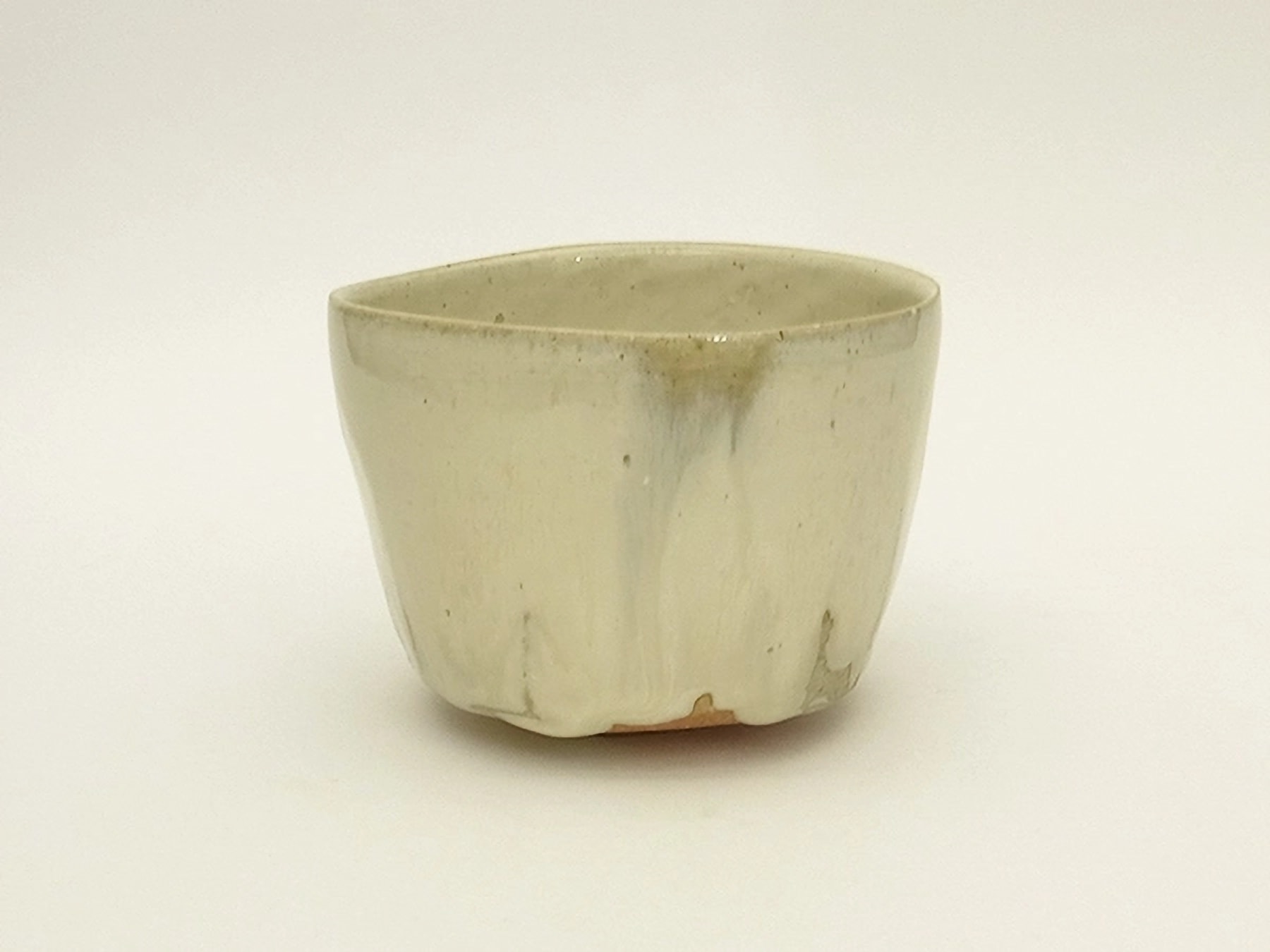
数ある粘土の中でも、白土は粒子が細かく、仕上がりも肌理細やかで繊細な雰囲気になる。Of all the many clays, white clay has especially fine particles, and the finished piece has a close-grained, delicate air.
陶器が磁器に近づく一歩手前の土、と言えばわかりいいだろうか。Perhaps the easiest way to put it is that it is a clay that takes pottery to within a step of porcelain.
僕があの黒い茶碗に、チェロではなくバイオリンの音を連想したのも、白土のこうした特質によるものなのかもしれない。It may be just these qualities of white clay that made me think of a violin rather than a cello when I saw that black bowl.
ジョブズが釈永君との英語での筆談で、果たしてどこまで白土の特質を理解したのかは定かでないが、土そのものに興味を示したことは事実で、らしいと言えば言えそうな気がする。How far Jobs grasped the nature of white clay through the notes he and Shakunaga wrote to each other in English is anyone's guess; but it is a fact that he took an interest in the clay itself, and that, one might say, was very like him.
そして土に関わる質問の中で、ジョブズは釈永君のもう一つの大きな特徴を知ることになった。And in the course of his questions about the clay, Jobs came to learn of another of Shakunaga's great hallmarks.
ほとんどの陶芸家は粘土を業者から購入して作陶しているが、釈永君は裏山の土を自分で掘って作陶している。Most potters buy their clay from suppliers, but Shakunaga digs his own from the hills out back and makes his pots from that.
こうした土の段階からの手作りスタンスがジョブズの気に入ったのではないだろうか。Might it not have been this hands-on approach, making everything himself from the clay up, that appealed to Jobs?
僕はそんな気がしてならない。I can't shake the feeling that it was.
考えてみるがいい、青年期の無名で貧乏学生だったジョブズが、ガレージで身の回りのガラクタ部品をかき集めて最初のコンピューターを作ったことを。Just think of it: as a young man, an unknown, penniless student, Jobs scraped together bits of junk from all around him and built his first computer in a garage.
今、僕が気に入ったあの黒い茶碗は、何処にあるのだろう・・・・。Where is it now, I wonder, that black bowl I loved…
実は、ジョブズが買ったんだろうと16年前から思っている。The truth is, for sixteen years I have assumed that Jobs bought it.
それでジョブズの死のニュースがそのまま、僕にとっては茶碗の連想になってしまったのだが・・・。Which is why, for me, the news of his death turned straight into the image of that bowl…
16年前、あんなにも気に入った茶碗を、どうして買わなかったのか、これには理由がある。Why did I not buy it sixteen years ago, when I loved it so much? There was a reason.
茶道もやらない僕が抹茶茶碗を買ったところで、勝手な使い方をすれば茶碗に失礼になるんじゃないか、そんなことを考えてしまったのだ。I don't practise the tea ceremony, and I got it into my head that if someone like me bought a matcha bowl and used it any old way, it would be disrespectful to the bowl.
その後、僕の考え方は大きく変わり、今なら躊躇いもなく買い、お茶漬けを食べるなりカフェ・オレボールにするなり、好きなように使うことだろう。My thinking has changed a great deal since then; today I would buy it without hesitation and use it just as I liked — to eat ochazuke from, or as a café au lait bowl.
茶碗とはそういうものなのじゃないだろうか。Isn't that, after all, what a tea bowl is?
陶芸家の手許や個展会場にあるうちはまだまだ完成されたわけでなく、使い手の手垢がついて初めて完成に至る。While it is still with the potter or in an exhibition room it is far from finished; only when it bears the marks of its user's hands is it complete.
とすれば、どう使ってどう完成させるかは、あくまでも使う側にあるのではないか。If so, then how it is used, and how it is brought to completion, is surely up to the one who uses it.
ジョブズは茶道をやっていた人ではない。Jobs was no practitioner of the tea ceremony.
抹茶を飲みはしただろうが、ひょっとしたら好きなボブ・ディランでも聴きながら、すりおろしリンゴを入れてスプーンで食べたりしていたのかもしれない。He will have drunk matcha from it, no doubt, but perhaps, listening to his beloved Bob Dylan, he also filled it with grated apple and ate from it with a spoon.
うらやましい!How I envy him!
それにしても・・・と僕は思う。All the same… I think to myself.
僕の生まれ故郷である立山町の白土が、ひとつの美しい茶碗となって、今はジョブズの遺品としてカリフォルニアにある。White clay from Tateyama, the town where I was born, became one beautiful tea bowl, and now it is in California, among the things Jobs left behind.
こりゃあ、とんでもないことだ、と。Well, now — that really is something extraordinary.
Credits
- Text
- 金木 静
- Artist
- Yukio Shakunaga (Shoraku kiln, Ecchu-Seto ware)